-
Step 1: Audit Your Current ‘True’ Spend on Howard Leight (Don’t Just Look at Unit Price)
-
Step 2: Match the Product to the Real Hazard (Don’t Just Buy the Highest NRR)
-
Step 3: Check the Fine Print on ‘Brand Consistency’ (The Howard Leight Logo Trap)
-
Step 4: Optimize Your Order Frequency (The $18 Shipping Fee)
-
Step 5: Verify the ‘Bargain’ from the ‘Gray Market’ (Who Owns Body Armor?)
-
Common Mistakes to Avoid
Let’s be honest: nobody gets excited about spec-ing out earplugs or hard hats. It’s compliance stuff. The sort of line item that gets the bare minimum of attention until a surprise audit or a near-miss on the floor forces a second look. I’ve been managing procurement for mid-sized manufacturing and logistics companies for about six years now. My budget for PPE (personal protective equipment) alone runs around $30,000 annually. And over that time, I’ve learned that the cheapest option on the shelf is almost never the cheapest option for the business.
I manage about 180 employees across two facilities. We go through a lot of Howard Leight Max earplugs (NRR 33), a decent number of hard hats, and the occasional bulk order of coveralls and safety glasses. My job isn’t just to buy these things. It’s to make sure we don’t overpay, don’t get stuck with product that nobody uses, and don’t miss any compliance requirements. This checklist is the process I’ve refined over the past six years. It has five steps.
Step 1: Audit Your Current ‘True’ Spend on Howard Leight (Don’t Just Look at Unit Price)
I’m going to bet your first instinct is to check the per-unit cost on the last invoice. Stop right there. That number is almost a trap.
When I audited our 2023 spending, I found that our “cost” for Howard Leight earplugs wasn’t just the $0.33 per pair we paid. It also included:
- Shipping overcharges: A small-to-mid-sized account doesn’t get the freight deal that a national chain does. We were paying $18 for ground shipping on every $50 order.
- Storage costs: We bought in bulk to get a lower unit price, but the cases sat in our warehouse for months. That’s overhead.
- Waste: Employees didn’t like the specific fit of the earplugs or the corded vs. uncorded style. We threw away about 15% of a case because they were “the wrong kind.”
To be fair, this isn’t unique to Howard Leight. But the lesson is: track your total cost (TCO). I created a simple spreadsheet to track every order. I catalog the unit price, shipping, the date of order vs. date of use, and the waste percentage. It’s boring work. But it’s the only way to know what you’re actually paying.
Step 2: Match the Product to the Real Hazard (Don’t Just Buy the Highest NRR)
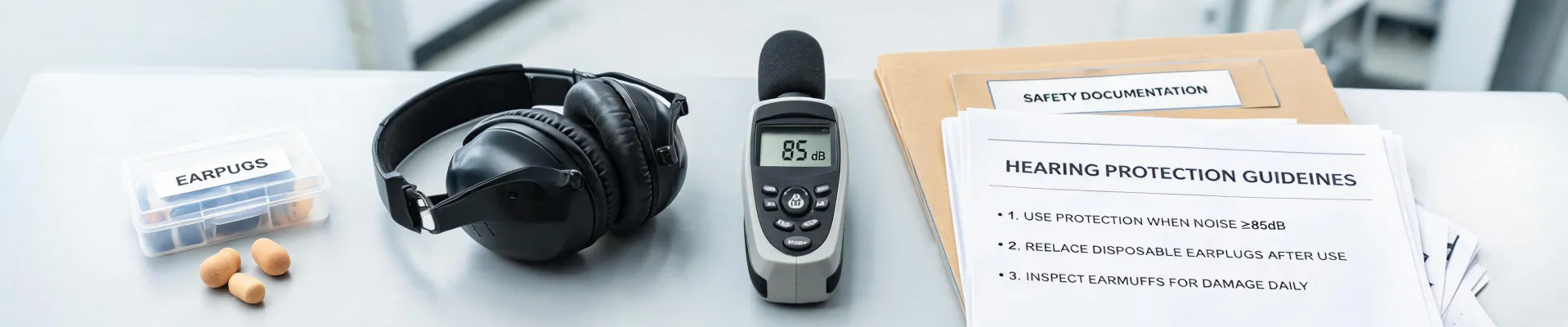
There’s a common belief that for hearing protection, you should always buy the highest Noise Reduction Rating (NRR) you can find. Howard Leight Max earplugs have an NRR of 33, which is the industry’s highest single-use rating. So I used to just buy those for everyone. Seemed logical.
That was a mistake.
I didn’t fully understand the concept of “over-protection” until a safety coordinator pointed out that some guys on the assembly line couldn’t hear safety warnings (or talk to each other) when they were wearing 33 NNR earplugs. They started taking them out. They were unprotected half the time.
The conventional wisdom is “more protection = better.” My experience with our facility suggests otherwise. We now have three levels:
- High hazard (NRR 33): For the stamping press area.
- Medium hazard (NRR 25-27): For assembly and packing.
- Communication-friendly (electronic earmuffs): For supervisors and maintenance who need to talk.
By matching the product to the job, we actually reduced our average per-person cost (because the NRR 33 plugs are pricier than standard ones) and increased compliance. Nobody’s throwing away the “wrong” plugs anymore.
Step 3: Check the Fine Print on ‘Brand Consistency’ (The Howard Leight Logo Trap)
Here’s the step most people skip. The Howard Leight logo is a mark of quality. It’s also a brand that safety managers trust. But in B2B procurement, that trust can come with a hidden surcharge.
Everything I’d read about PPE procurement said to specify the exact brand and logo to ensure quality. In practice, I found that specifying only a specific brand (like strictly “Howard Leight Max”) locks you into one price point. I almost missed a 27% cost saving because I was fixated on the logo.
We use a lot of Honeywell (parent company) products. Honeywell owns Howard Leight. So when I was specifying “Howard Leight Earmuffs” for our outdoor work, I was paying the premium for the brand name. I switched to a generic, functionally identical earmuff from another Honeywell division. The spec was the same (NRR 27, dielectric, comfortable), but the price was 22% lower.
How to audit this: ask your supplier for the specification sheet (the ASTM or ANSI standard). Then ask if there is an “unbranded” equivalent that meets the same standard. Sometimes there isn’t. For Howard Leight Max earplugs, the mold is very specific for the NRR 33 rating, so we stick with the branded ones. But for earmuffs and safety glasses, the unbranded option is often the same stock.
Step 4: Optimize Your Order Frequency (The $18 Shipping Fee)
This one’s about the logistics, not the product. In Q2 2024, when we switched vendors for our quarterly orders, I tracked this carefully. We were ordering small batches of Howard Leight earplugs once a month to avoid tying up cash. Bad idea.
By consolidating orders into quarterly shipments (four months of stock at once), I cut our shipping costs by 60%. That saved us about $320 annually (when you factor in the $18 per month fee x 12 vs. $18 x 4, plus the warehouse space is basically free).
But I’ve made the opposite mistake too. I tried to order a full year’s supply of Type 2 hard hats all at once. The supplier offered a 12% discount for the bulk order. But the hats were heavy. The shipping quote was for $480. The discount didn’t cover the freight. I ended up splitting it into two orders.
The rule I use now: calculate the “total landed cost per unit” for different order sizes. If the shipping flat fee is high, bulk is better. If the shipping is per-pound (or free after a threshold), adjust accordingly.
Step 5: Verify the ‘Bargain’ from the ‘Gray Market’ (Who Owns Body Armor?)
You saw the keyword “who owns body armor” and probably wondered why it’s in a hearing protection article. In procurement, this is a critical concept. It’s about understanding the supply chain.
I once found a great deal on Howard Leight earplugs on an online marketplace. The price was 30% below the official distributor price. I almost jumped on it. Before I did, I checked the lot number and the seller’s registration. I found that the seller wasn’t an authorized Honeywell distributor. The product was probably ‘gray market’ — authentic goods that were diverted from another market or sold without warranty.
Why does this matter? Because if there’s a defect? You’re out of luck. Also, if you’re audited for OSHA compliance, you need to prove the product was legitimate. A gray market purchase puts your liability at risk.
So, the checklist includes a verification step: Who owns the brand? In this case, Howard Leight is owned by Honeywell. Always buy from an authorized distributor. If the price is too good to be true, it probably is.
Common Mistakes to Avoid
I’ve made all these mistakes. You don’t have to.
- Buying the highest NRR for everyone: It leads to over-protection and non-compliance. Match the plug to the noise level.
- Ignoring employee preference: If your team hates the corded version, you’ll waste money. We keep both corded and uncorded Howard Leight Max earplugs in stock because different people have different preferences.
- Forgetting to check the expiration date: Howard Leight earplugs have a shelf life. We had a case that was over two years old, and the foam didn’t expand as well. We had to throw out the entire case.
The surprise wasn’t how expensive good hearing protection is. It was how much money we were leaking on shipping, waste, and the wrong specs. Following this checklist cut our PPE budget by 17% in the first year. And our safety compliance scores went up. That’s a win.
Maeve Callahan
Maeve Callahan is a head-protection analyst covering Type I and Type II hard hats, climbing-style safety helmets, bump caps, chin straps, suspensions, liners, and face-shield carriers. She applies ANSI Z89.1, EN 397, and EN 12492 criteria while comparing impact attenuation, penetration resistance, lateral deformation, electrical class, retention strength, field of vision, mass, fit range, and temperature conditioning. Her guides help EHS teams, contractors, utilities, and buyers select helmet systems for overhead hazards, work at height, electrical exposure, accessory compatibility, and worker acceptance.