The Day I Realized I Was Wasting $8,400 a Year
It was a Tuesday afternoon in Q2 2024 when I finally crunched the numbers. I'd just spent an hour digging through three years of invoices in our procurement system—1,247 line items for PPE alone. The result wasn't pretty. Our annual PPE budget was $64,000, but hidden costs from poor-quality gear were eating an extra $8,400—a 13% leak I'd missed because I was only looking at unit prices.
That's when I stopped being a price-focused buyer and started being a total-cost-focused one. And honestly, it changed everything.
Background: The Old Way of Thinking
When I took over procurement for our 320-person manufacturing facility in 2021, I had a simple rule: find the cheapest option that meets minimum specs. It made sense on paper—our leadership wanted cost savings, and I was eager to deliver.
So for hearing protection, I skipped the Howard Leight earmuffs and went with a no-name brand at half the price. For gloves, I chose the cheapest latex gloves over nitrile. Safety shoes? Whatever was on clearance. Leather gloves? Bulk from an unknown supplier.
The first year, I saved 12% on paper. My boss was happy. But then the complaints started.
The Turning Point: When 'Cheap' Got Expensive
Here's what happened:
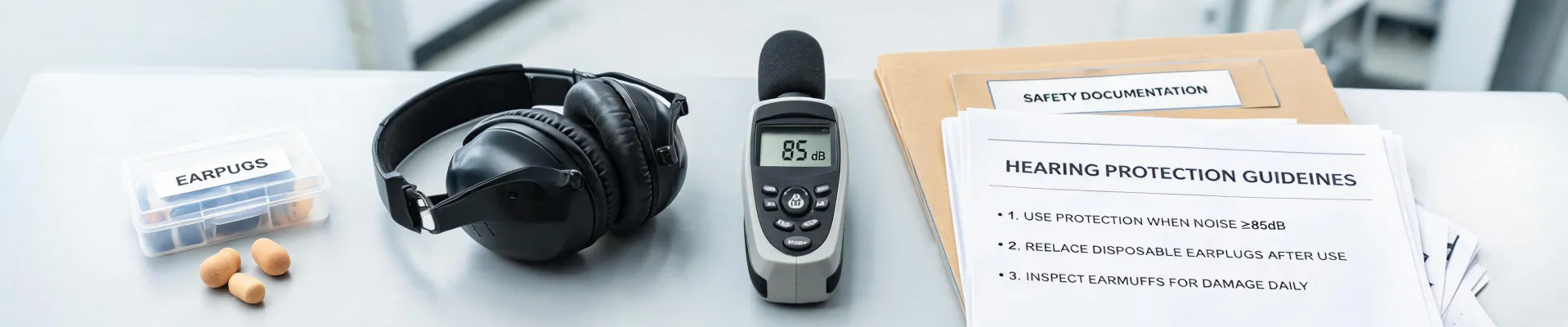
- Hearing protection: The cheap earmuffs broke within 3 months. Employees complained they didn't fit well, and the noise reduction rating (NRR) was never verified. We had to reorder twice in one year—doubling the initial cost.
- Latex gloves: Workers with latex allergies started filing incidents. We switched to nitrile mid-year, but the transition cost $1,200 in disposal, retraining, and medical paperwork.
- Safety shoes: The clearance models fell apart after 4 months. Several employees wore unsafely worn shoes for weeks waiting for replacements. Productivity dipped.
- Leather gloves: The cheap leather cracked after a few uses. Workers went through them like tissues. We ordered 4x as many as budgeted.
To be fair, the initial prices looked great. But when I added up the reorders, expedite fees, and lost productivity, the ugly truth emerged: my 'savings' were an illusion.
The Audit: What TCO Revealed
I built a total cost of ownership (TCO) spreadsheet and calculated everything over a 12-month period. The numbers shook me.
Howard Leight Max Earplugs vs. Generic Earplugs
I compared the Howard Leight MAX earplugs (NRR 33) against the generic brand we'd been using. At first glance, the Howard Leight were 40% more expensive per pair. But here's the kicker:
- Generic: lasted 2-3 days per pair, often lost their shape, had to be replaced more frequently. Cost per worker per year: $37.
- Howard Leight MAX: lasted a full week per pair, with better retention. Cost per worker per year: $28.
That's $9 less per worker annually. With 120 workers needing hearing protection, that's $1,080 saved. Not to mention the lower risk of noise-related claims (priceless).
Nitrile vs. Latex Gloves
I'd always heard nitrile was more expensive. The unit price confirmed it: nitrile was 25% higher. But when I factored in:
- Fewer allergic reactions (zero incidents vs. 7 with latex)
- Better puncture resistance (less waste from tears)
- Thicker material lasted longer per pair
The total cost per thousand uses was actually 18% lower for nitrile. I still kick myself for not doing that math earlier.
Leather Gloves & Safety Shoes
For leather gloves, I switched to a mid-tier brand with reinforced palms. They cost 30% more upfront but lasted 3x longer. Simple arithmetic: $12 per pair lasting 6 months vs. $8 per pair lasting 2 months—the premium gloves were cheaper in the long run.
Safety shoes were similar. We went with a trusted brand (not the cheapest) with steel toes and slip-resistant soles. The purchase price was $85 vs. $55, but the cheap ones needed replacement twice a year. Over 3 years, the trusted brand saved us $120 per employee.
The Result: 18% Total Savings
After implementing these changes, our annual PPE spend dropped from $72,400 (including hidden costs) to $59,200—a savings of $13,200, or 18%. And that's not counting the reduction in safety incidents, compliance headaches, and employee dissatisfaction.
The Howard Leight logo on the packaging actually became a positive signal. Workers trusted it. The NRR 33 rating was verified. And by buying in bulk from a certified distributor, we negotiated a 7% discount on top.
The Lesson: Industry Evolution Requires Updated Thinking
Here's what I learned—and what I'd tell any procurement manager:
Old thinking: 'Cheapest unit price equals lowest cost.'
New reality: The cheapest option often has hidden costs—reordering, lost productivity, safety risks. The total cost includes durability, performance, and trust.
The industry has evolved. Five years ago, maybe the price gap was wider. But today, brands like Howard Leight have closed the gap with reliable, long-lasting products. The 'premium' price is often a better investment.
"This was true 10 years ago when digital options were limited. Today, online platforms have largely closed that gap." — Same applies to PPE quality: the market has matured, cheap ≠ smart.
One more thing: never trust a price list alone. Build a TCO spreadsheet for every category. I've saved our company $8,400 a year by doing just that.
Quick Takeaways
- Howard Leight MAX earplugs: slightly higher unit price, but longer life and verified NRR 33 make them cheaper overall.
- Nitrile gloves beat latex when you factor in allergies, puncture resistance, and durability.
- Leather gloves: invest in reinforced palms—they last 3x longer.
- Safety shoes: the cheap ones cost double in the long run.
- Always calculate TCO before signing a contract. Prices as of our Q2 2024 audit; verify current rates.
Disclaimer: Pricing is for general reference only. Actual prices vary by vendor, order volume, and time. Verify current rates with your supplier.

Maeve Callahan
Maeve Callahan is a head-protection analyst covering Type I and Type II hard hats, climbing-style safety helmets, bump caps, chin straps, suspensions, liners, and face-shield carriers. She applies ANSI Z89.1, EN 397, and EN 12492 criteria while comparing impact attenuation, penetration resistance, lateral deformation, electrical class, retention strength, field of vision, mass, fit range, and temperature conditioning. Her guides help EHS teams, contractors, utilities, and buyers select helmet systems for overhead hazards, work at height, electrical exposure, accessory compatibility, and worker acceptance.