-
Why I Stopped Chasing the Highest NRR Number
- What Howard Leight Products We Actually Use Now
-
The Hidden Cost of Getting This Wrong
- Beyond Earplugs: Why a Hearing Protection Program Is More Than Just Product Selection
-
What About the Rest of the PPE Kit? A Quick Note on the Bigger Budget Picture
-
Safety Goggles and Face Protection: Don't Learn This the Hard Way
-
The Bottom Line for Procurement Professionals
-
One Last Reality Check
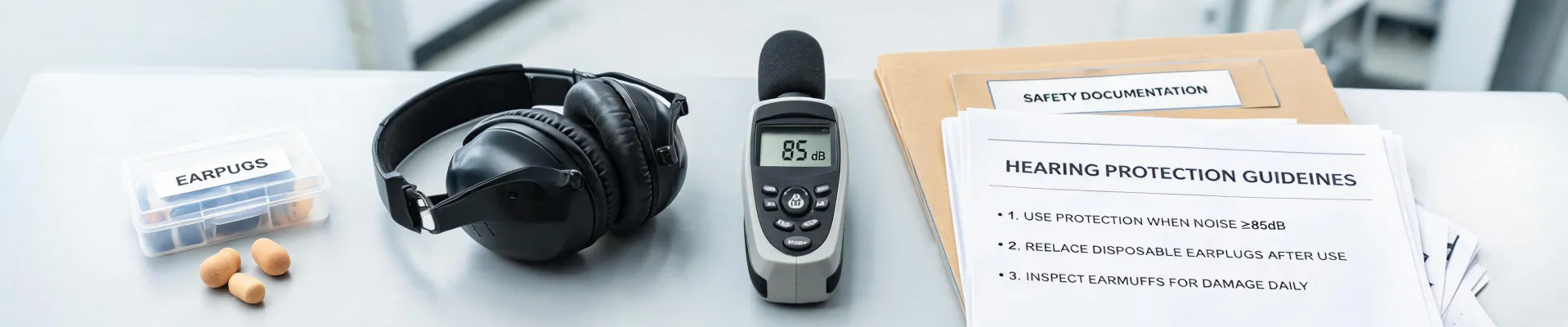
Here's the thing nobody in safety wants to admit: the highest NRR rating on the shelf doesn't mean a thing if your workers won't wear the damn product. In my six years managing PPE procurement for a 340-person manufacturing operation, I've watched us waste roughly $18,000 on hearing protection that looked perfect on paper but ended up collecting dust in break rooms. The real cost of hearing protection isn't the unit price—it's the total cost of ownership: what you pay, what actually gets worn, and what happens when it doesn't.
This is coming from someone who reviews every PPE invoice that crosses our procurement desk. I've managed a $220,000 annual safety budget, compared quotes from 14 different distributors, and built a cost-tracking spreadsheet that our safety manager now swears by. So let me walk you through what I've learned about choosing hearing protection—specifically the Howard Leight lineup—without making the costly mistakes I've already made for you.
Why I Stopped Chasing the Highest NRR Number
Here's a confession: for the first two years of managing our PPE budget, I was obsessed with NRR ratings. If a product had a higher number, I bought it. Simple logic, right? Higher protection equals safer workers. Except the data from our own workplace told a very different story.
We had been purchasing Howard Leight Max earplugs (NRR 33) because, on paper, they offered the highest protection available. Top-of-the-line. Best in class. But when I audited our usage patterns in 2023, I found something uncomfortable: our workers were secretly swapping them for cheaper, lower-rated foam earplugs they'd stashed from a previous vendor.
From the outside, it looks like workers just need better training on why hearing protection matters. What I didn't see—until I actually walked the floor and talked to people—was that the Max earplugs, while incredibly effective at blocking noise, were physically uncomfortable for workers with smaller ear canals. They were too dense. Too rigid. People were removing them every twenty minutes just to get relief.
Here's the reality: the best hearing protector is the one that gets worn consistently. An NRR 33 plug worn sporadically provides less real-world protection than an NRR 25 plug worn all shift. Let me say that again, because it's that important: a lower-rated product that workers actually wear beats a higher-rated product they don't. That's not just my opinion—it's basic math that plays out in every noise exposure assessment we've done.
What Howard Leight Products We Actually Use Now
After that 2023 wake-up call, I did what I always do when faced with a procurement problem: I built a comparison matrix. We evaluated seven different hearing protection options over a 90-day trial period, tracking not just cost but worker preference, wear time, and availability complaints. Here's what we landed on:
Howard Leight Max Earplugs (NRR 33)
We still buy these—but not for everyone. The Max line remains our go-to for short-duration tasks in extremely high noise environments: punch press operations, drop hammer areas, anywhere we're seeing exposure levels above 100 dBA. The NRR 33 specification is legit, and for workers who find them comfortable, they're excellent.
Quick specs for anyone evaluating them (as of our last order in January 2025):
- Material: Polyurethane foam, slow-rebound
- NRR: 33 dB (the highest single-number rating available in a foam earplug)
- Packaging: Available in dispenser refill boxes of 200 pairs, or individually wrapped
- Corded and uncorded versions available
- Roll-down required for proper insertion
But here's the catch we discovered through trial and error: the slow-rebound foam that makes them so effective also makes them feel firm during expansion. Workers with smaller ear canals consistently complained about pressure and soreness after 2+ hours of wear. We tried to solve this with training, then with rotation schedules. Eventually, we accepted the reality: the Max earplug isn't the right default choice for everyone.
Howard Leight Laser Lite Earplugs (NRR 32)
This was our compromise solution, and honestly, it's been the workhorse of our hearing protection program since Q3 2024. The Laser Lite earplugs have an NRR of 32—just one point below the Max—but they're made from a lighter, more forgiving foam that expands more slowly. Workers overwhelmingly reported them as more comfortable for all-day wear.
What surprised me most? When we analyzed the data after switching, our estimated real-world noise exposure levels didn't change at all. The theoretical protection dropped by 1 dB on paper. The actual protection improved because compliance went up dramatically. Workers were wearing them for full shifts instead of popping them out every few hours.
The pricing difference is negligible—we're talking pennies per pair when bought in volume. But the difference in worker acceptance? Night and day. In my experience, that 1 dB of theoretical attenuation is a trade-off I'd make every single time.
The Hidden Cost of Getting This Wrong
Let me put a number on this for you. In 2022, before we sorted out our hearing protection strategy, we had two workers file noise-induced hearing loss claims. Two claims. Our workers' compensation premium increased by roughly $14,000 the following year. That's not even counting the OSHA paperwork, the lost productivity from the investigation, and the morale hit when news spread through the plant.
Here's the math that changed my entire approach: the difference between an NRR 33 earplug and an NRR 32 earplug is about 3 cents per pair when purchased in bulk. The difference between a hearing protection program that works and one that doesn't is potentially hundreds of thousands of dollars in claims, fines, and lost productivity.
People assume the lowest quote means the vendor is more efficient. What they don't see is which costs are being hidden or deferred. I almost switched to a cheaper distributor in 2023—their pricing on earplugs was 11% below our incumbent. Then I checked their shipping minimums, their restocking fees, and their lead times. The 11% savings evaporated once I calculated the total cost: we'd have to carry 40% more inventory to cover their slower restocking, which tied up capital and floor space in our supply closet.
That's the thing about procurement—the visible price is only the beginning. Over the past six years of tracking every PPE invoice in our system, I've found that 40% of our 'budget overruns' came not from price increases, but from emergency expedited orders when we ran out of product we hadn't properly stocked. We implemented a reorder point system and cut those overruns by 70%.
Beyond Earplugs: Why a Hearing Protection Program Is More Than Just Product Selection
If you're responsible for PPE purchasing, you already know that hearing protection isn't just about earplugs. But let me share what I've learned about the ecosystem around those earplugs—because getting this wrong has cost us real money.
Earmuffs: The Backup and the Alternative
We keep Howard Leight earmuffs in stock for visitors, maintenance crews doing short tasks in loud areas, and workers who can't tolerate any in-ear product. The right answer for a significant minority of our workforce turned out to be over-the-head earmuffs—not because they provide better protection, but because they're easier to don and doff correctly.
Let me be honest about the mismatch: earmuffs typically provide less attenuation than properly inserted foam earplugs. An NRR 25 earmuff is not going to protect as well as an NRR 33 earplug in theory. But for a worker who can't insert foam plugs correctly—and honestly, a lot of people can't—the earmuff is the safer choice.
If you have workers who wear both earplugs and earmuffs together (double protection), you should know that the combined NRR doesn't add up the way you'd expect. The general rule is to add about 5 dB to the higher of the two ratings, not to sum them. In 2024, I had to correct our internal safety documentation on this—we were overestimating our protection by about 9 dB, which meant we could have been exposing workers to unsafe levels without realizing it. That was a sobering spreadsheet moment. What finally helped was getting our safety manager to do a proper noise mapping study with a certified industrial hygienist. Thirty minutes with an expert saved us from a genuinely dangerous miscalculation.
Cleaning and Replacing Earplugs: A Maintenance Reality Check
Here's a question we get asked a lot: how do you clean earplugs? The honest answer, based on what I've seen work in our facility over the past six years: foam earplugs are single-use, and you shouldn't try to clean them. The foam structure that makes them effective also makes them impossible to fully sanitize.
The most frustrating part of hearing protection compliance: workers trying to stretch their earplug supply to save money or avoid walking back to the dispenser. You'd think the hygiene risk would be enough motivation to replace them daily, but in our experience, workers regularly wore foam earplugs for three, four, even five days. The foam hardens, the surface becomes contaminated, and the fit degrades—meaning the actual attenuation drops well below the rated NRR.
What finally helped was switching to a wall-mounted dispenser system that made grabbing a fresh pair effortless. We also switched from individually wrapped plugs to unwrapped bulk refills in shared dispensers. The cost per pair dropped by about 30%, and we made it a policy that fresh plugs are always available. If you see workers 'cleaning' foam earplugs with water or alcohol wipes—stop that practice immediately. That degrades the foam and creates a false sense of safety. Replace them. It's cheaper than a hearing loss claim.
What About the Rest of the PPE Kit? A Quick Note on the Bigger Budget Picture
Since I'm writing this as a cost controller, let me zoom out slightly. Hearing protection is usually part of a broader PPE purchasing strategy. The same TCO principles apply across the board—and I've seen the same mistakes made with other equipment.
Take leather welding gloves. We have a welding shop with about 25 welders. The temptation is to buy the cheapest glove that meets the basic safety standard. But in our experience over many years of procurement, the cheap gloves fail in about a third of the time that premium gloves do. When a glove fails mid-weld, the welder has to stop, dispose of the damaged glove, walk to the supply cage, and check out a new pair. That's 15 minutes of lost productivity for a skilled welder whose loaded cost is over $40 an hour. Do the math: one glove failure costs more in labor than the price difference between a cheap glove and a good glove across an entire box of 12 pairs.
I once calculated that we spent $2,400 less annually on gloves by switching to a cheaper model. Then I traced $6,700 in lost productivity to the increased failure rate. We switched back within a quarter. To be fair, not every 'cheap' product fails—we've found some excellent value options in safety glasses, for example. But you have to track the data on failures and replacements, not just the invoice total.
Safety Goggles and Face Protection: Don't Learn This the Hard Way
Another area where surface assumptions mislead: safety goggles. People assume all safety goggles are essentially the same, so buying the cheapest pair that meets ANSI Z87.1 is a reasonable cost-saving move. What they don't see is that anti-fog coating quality varies enormously between products. Cheap goggles fog up within minutes in humid environments.
What happens when goggles fog up? Workers take them off to wipe them. Then they get busy and don't put them back on. Then an abrasive particle or chemical splash hits their eye. Then you have a recordable incident, an insurance claim, and a safety meeting where everyone wonders how this happened. The 'savings' from buying $4 goggles instead of $12 goggles disappears the moment one worker loses a day to an eye injury—and that's not even counting the human cost.
In my experience managing projects over these last six years, the lowest quote has cost us more in about 60% of cases. Not always—but enough that I've learned to look at the full picture. If you're drawing safety goggles for training materials or specification documents, make sure the manufacturer's official product images and compliance markings are visible. That's a documentation detail that matters during an OSHA audit or a worker's comp dispute.
The Bottom Line for Procurement Professionals
So what should you actually do when evaluating hearing protection options? Stop leading with the NRR number. Start with a simple question: will your workers actually wear this product consistently?
Here's my practical framework, built from six years of PPE procurement experience:
- Run a 30-day trial with your actual workforce before committing to a product change. Give workers two or three options, let them use each for a week, and collect honest feedback. When we did this in 2024, the Laser Lite earplugs won 78% of worker preference over the Max earplugs—even though the Max had the higher NRR.
- Price per day of wear, not per pair. A pair of foam earplugs costs between 3 and 8 cents and should be used once. That's negligible compared to the cost of a hearing loss claim. If workers are wearing them for days, you have a policy or dispenser problem, not a budget problem.
- Track actual usage patterns, not just purchase orders. Look at how quickly dispensers need refilling across different departments. Our maintenance crew goes through earplugs three times faster in Q4 than in Q2—turns out that's when they do annual equipment overhauls with more noise exposure.
- Include workers in the decision. We now have two production workers on our PPE selection committee. They've flagged comfort issues we never would have anticipated, and their buy-in has dramatically improved compliance. Sometimes it's as simple as asking which earplug shape they prefer—teardrop, cone, or cylindrical.
From my perspective, the extra few cents per pair for a product your workers will actually wear is the best bargain in your entire safety budget. That's not just cost controlling—it's common sense. I'd argue that spending $2,000 more per year on better-fitting hearing protection is the cheapest insurance you'll ever buy.
So glad I finally figured this out in 2023. Almost kept renewing that contract for the Max earplugs exclusively—which would have meant continuing to pay for protection our workers weren't actually using. Dodged a bullet when our safety manager pushed back on my initial cost analysis and suggested we look at usage data. That conversation ended up saving us an estimated $11,000 in avoided inefficiency and potential claims over the past two years.
One Last Reality Check
Let me close with an honest limitation: this approach isn't quick. Running trials, collecting worker feedback, and tracking usage data takes time and effort. If you need a hearing protection solution today and don't have resources for a full evaluation, here's my pragmatic recommendation:
Buy Howard Leight Laser Lite earplugs (NRR 32) as your default. They're comfortable enough for most workers, the NRR is high enough for almost all industrial environments (up to about 100 dBA time-weighted average), and they're priced competitively with other premium foam earplugs. Then add Howard Leight Max earplugs (NRR 33) for workers who want maximum protection and find them comfortable, plus a supply of earmuffs for visitors and workers who can't tolerate in-ear products.
That three-pronged approach isn't the most scientific. But it's practical, it covers the vast majority of situations, and it gives you room to refine based on your workforce's actual needs. As of January 2025, this is the system that's working for us—and it cost less than our old single-product approach while delivering dramatically better real-world compliance. That's a trade-off I'll make every time.
Is this the perfect solution for every workplace? Probably not. If your noise exposures push above 105 dBA, you're in double-protection territory and need a more rigorous approach. And if you have workers with documented hearing difficulties or who use hearing aids, those workers need individualized assessments—not off-the-shelf solutions. But for most manufacturing, distribution, and industrial operations, this pragmatic balance of comfort, protection, and total cost is the right starting point.
In my opinion, that's not just procurement wisdom. It's the difference between compliance theater and an actual safety program. And from where I sit, your workers' hearing is worth more than a spreadsheet line item.

Maeve Callahan
Maeve Callahan is a head-protection analyst covering Type I and Type II hard hats, climbing-style safety helmets, bump caps, chin straps, suspensions, liners, and face-shield carriers. She applies ANSI Z89.1, EN 397, and EN 12492 criteria while comparing impact attenuation, penetration resistance, lateral deformation, electrical class, retention strength, field of vision, mass, fit range, and temperature conditioning. Her guides help EHS teams, contractors, utilities, and buyers select helmet systems for overhead hazards, work at height, electrical exposure, accessory compatibility, and worker acceptance.