Fit First
Reduce abandoned PPE by giving workers options that match ear canal comfort, communication needs, hygiene routines, and NRR targets.
Sustainability in PPE cannot be reduced to one material claim. A responsible hearing protection program considers worker acceptance, replacement intervals, packaging efficiency, training, and whether reusable products are realistic for the task and hygiene requirements.
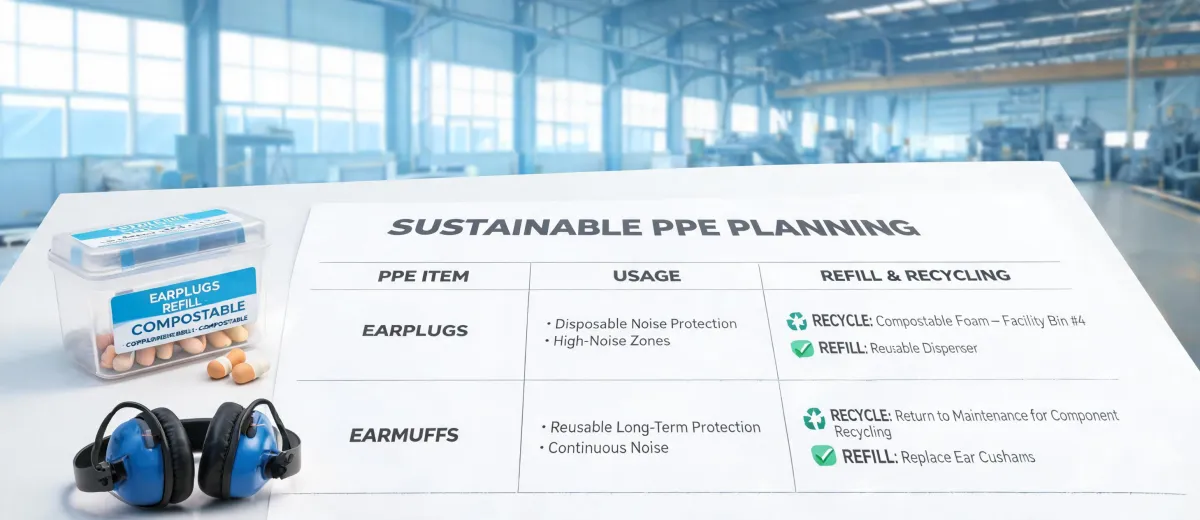
Wrong-fit PPE creates waste in several ways: unused boxes, repeated trials, short wearing time, avoidable substitutions, and confusion during training. A better program starts by matching product families to work conditions, then maintaining the documentation that explains why each option belongs in the site standard. Howard Leight by Honeywell supports that process with clear attenuation data, comfort-focused selection, and distributor stocking guidance.
Where reusable plugs or durable earmuffs fit the environment, they can support lower disposable consumption. Where disposable foam plugs are the responsible choice, dispenser planning, carton optimization, and training help reduce misuse. The goal is practical improvement, measured by the buyer program over time.
Reduce abandoned PPE by giving workers options that match ear canal comfort, communication needs, hygiene routines, and NRR targets.
Consolidate approved SKUs by site type so distributors can replenish reliably without sending unnecessary substitutions.
Use annual program reviews to identify overstock, underused products, and training gaps without making unsupported reduction claims.
Sample dashboard values are illustrative planning metrics; final reporting should use buyer facility data and defined time windows.
Send product complaints, replacement frequency, and stocking constraints. We will help map practical improvement options.