-
The $0.08 earplug vs. the $0.22 earplug: what I actually compare now
-
Dimension 1: Unit price vs. cost per protected hour
-
Dimension 2: NRR 33 dB and real-world attenuation
-
Dimension 3: Worker acceptance and hidden compliance costs
-
Dimension 4: Vendor reliability, packaging, and bundling
-
Dimension 5: TCO beyond earplugs: navy coveralls and fire alarm resets
-
Decision guide: when generic wins, when Howard Leight wins
The $0.08 earplug vs. the $0.22 earplug: what I actually compare now
I'm a procurement manager at a 400-person manufacturing company. I manage about $260,000 in annual PPE spend across hearing protection, respirators, safety glasses, gloves, and navy coveralls. In 2023, I audited our hearing protection line because our finance team wanted a 15% cut. The easy target was Howard Leight Max-1 foam earplugs. A generic bulk foam plug looked almost identical on paper and cost less than half as much. I went back and forth between the generic and the Howard Leight Max-1 for two weeks. On paper, generic made sense. My gut said no. Here's the framework I use now: upfront unit cost, NRR and fit, compliance, waste, vendor reliability, and total cost of ownership.
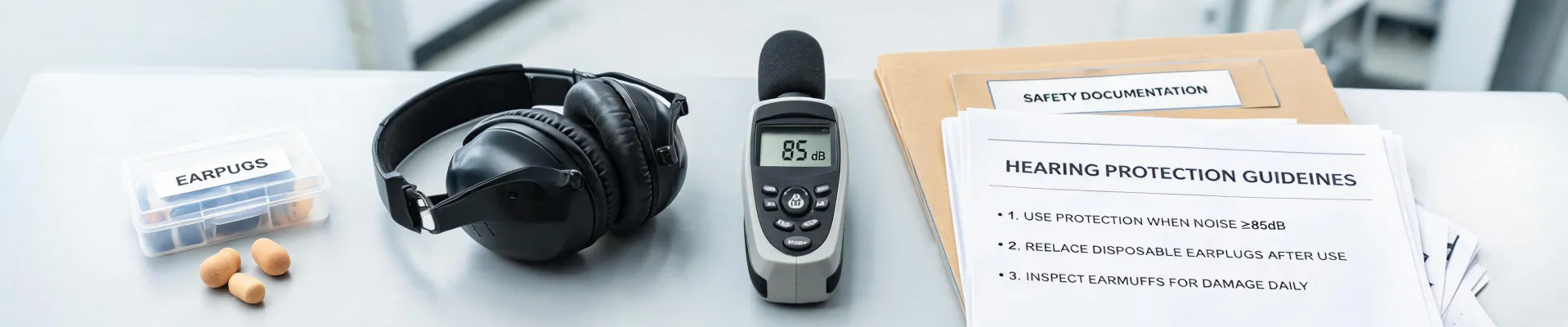
According to OSHA 1910.95, employers must provide hearing protectors at no cost when noise exposure reaches 85 dBA TWA, and protectors must bring exposure below the permissible limit. The NRR on the box is a lab rating. Real-world fit is the variable you actually manage.
If you're sourcing howard-leight products, the brand name carries weight, but the name alone isn't a TCO argument. The numbers have to survive a spreadsheet.
Dimension 1: Unit price vs. cost per protected hour
In our Q1 2024 contract, generic foam plugs landed at about $0.08 per pair. Howard Leight Max-1 foam earplugs were about $0.21 per pair. That's a 162% unit price gap. I almost stopped there. But unit price isn't cost per protected hour. If a worker uses three generic pairs per shift because they degrade or fit poorly, that's $0.24 per day. If the Howard Leight pair lasts a full shift, that's $0.21. Suddenly the gap is smaller. The real swing came from compliance. During a 90-day trial on one line, generic saved $1,820 upfront. But we logged 14 fit complaints, three retraining sessions, and 11 hours of safety manager time. At a loaded rate of $65 per hour, that's $715. We also ran out twice because the bulk packaging didn't fit our dispenser, so a supervisor drove to a local supplier. Add mileage and lost time, and the landed cost difference shrank to under $400. That's not worth the audit risk.
Dimension 2: NRR 33 dB and real-world attenuation
Howard Leight Max earplugs NRR 33 dB is one of the highest foam ratings you'll find. That number matters, but not in the way most people think. NIOSH recommends derating formable foam earplugs by 50% for a conservative real-world estimate. So a 33 dB NRR becomes roughly 16.5 dB of assumed protection. Generic foam may also claim 32 or 33 dB, but batch consistency and fit vary more. We did an internal fit check with 12 workers on both products. It wasn't a lab study, just a quick check with our safety manager. Howard Leight had fewer poor-fit results, especially on workers with smaller ear canals. In a 95-100 dB area, that consistency is the difference between passing an audiometric review and explaining a standard threshold shift.
Dimension 3: Worker acceptance and hidden compliance costs
This is the dimension that surprised me. Everything I'd read said unit price drives savings. In practice, worker acceptance drove our total cost. The generic foam was firmer. Several workers said it hurt after two hours. They'd wear it loose, or they'd pull it out during breaks and forget to put it back in. Howard Leight Max-1 got fewer complaints, so compliance stayed higher. I still kick myself for not tracking compliance cost earlier. In 2022, a temp worker in a high-noise area had rolled generic plugs incorrectly. No injury, thank goodness, but the investigation cost us six hours across safety, HR, and production. Now I include a line in my TCO sheet: safety manager hours per 100 users per month.
Dimension 4: Vendor reliability, packaging, and bundling
Generic bulk bags are cheap until you count the time. Dispenser refills, torn bags, missing pairs, and inconsistent sizes all create soft costs. Howard Leight comes in dispenser-compatible packaging and stable SKUs. That matters when you're also ordering navy coveralls, safety glasses, respirators, and gloves. We consolidated hearing protection with our main PPE distributor. Bundling didn't change the earplug unit price much, but it cut freight and purchase order processing. In 2024, reducing PPE suppliers from seven to four saved us about $3,100 in admin time and freight. Not huge, but real. I'd rather have one reliable SKU than three cheap ones that keep going out of stock.
Dimension 5: TCO beyond earplugs: navy coveralls and fire alarm resets
The same total-cost logic applies to every PPE and facility line. Navy coveralls look simple until you compare cotton versus FR versus disposable, laundering, and replacement rates. A $22 coverall that lasts 18 washes can beat a $12 coverall that fades in six. Facility systems are the same. The first time we had a false alarm, nobody knew how to reset fire alarm. We spent 45 minutes on hold, then paid $150 for an after-hours call. Now that procedure is posted at the panel, and two people per shift are trained. That's TCO too: the cost of not knowing.
NFPA 72 covers fire alarm inspection, testing, and maintenance, but reset steps vary by panel. Document your specific procedure and train more than one person per shift.
Decision guide: when generic wins, when Howard Leight wins
I won't tell you one always wins. Here's how I decide:
- Choose generic foam if noise exposure is low, workers are closely supervised, you already have strong fit training, and your safety manager can absorb variability. For short projects or visitor plugs, generic can be fine.
- Choose Howard Leight Max-1 foam earplugs if you're in 90+ dB areas, run multi-shift operations, have compliance drift, or need consistent NRR 33 dB performance. The higher unit price is easier to justify when retraining and rework are expensive.
- Run a 60-90 day trial before switching either way. Track fit complaints, usage per worker, reorder frequency, and safety manager hours. If you don't track those, you're comparing stickers, not cost.
For PPE categories like navy coveralls or hearing protection, I now calculate TCO before comparing any vendor quotes. The $500 quote that includes setup and training can be cheaper than the $350 quote with hidden add-ons. Same with earplugs: the cheapest pair is rarely the cheapest protection program.
Prices and examples are from our 2024-2025 procurement records. Verify current pricing and regulations with your distributor and OSHA/NIOSH guidance. This isn't legal or safety advice.

Maeve Callahan
Maeve Callahan is a head-protection analyst covering Type I and Type II hard hats, climbing-style safety helmets, bump caps, chin straps, suspensions, liners, and face-shield carriers. She applies ANSI Z89.1, EN 397, and EN 12492 criteria while comparing impact attenuation, penetration resistance, lateral deformation, electrical class, retention strength, field of vision, mass, fit range, and temperature conditioning. Her guides help EHS teams, contractors, utilities, and buyers select helmet systems for overhead hazards, work at height, electrical exposure, accessory compatibility, and worker acceptance.