Why I Compare Hearing Protection by TCO, Not Unit Price
I’m an office administrator for a 140-person company. I manage all facilities and safety supply ordering—roughly $90,000 annually across 11 vendors. I report to both operations and finance. That means I buy everything from latex gloves to baby fence panels for our front-office play area, plus hearing protection for our warehouse and maintenance crews.
When I took over purchasing in 2020, I compared hearing protection the way most people do: unit price and NRR. After a few expensive mistakes, I switched to TCO—total cost of ownership. I started by searching howard-leight reviews, then narrowed to two options I keep coming back to: Howard Leight Max Lite earplugs and the earmuffs Howard Leight Impact Sport. If you’ve ever had to explain to finance why you bought 5,000 earplugs, you know why this matters.
Here’s the framework I use: upfront price, real-world fit, compliance, and employee acceptance. I’ll compare both options on each.
Dimension 1: Upfront Price vs Real Cost per Shift
The sticker price is the easy part. As of January 2025, a 200-pair box of Howard Leight Max Lite earplugs runs about $25-35 from major safety distributors. The Howard Leight Impact Sport earmuffs run about $45-65. Verify current pricing, because safety distributors discount aggressively.
But the sticker price is not the cost. For Max Lite, you also pay for storage, dispenser refills, and the labor to restock them. For Impact Sport, you pay for batteries, hygiene pads, and replacement when someone loses them. If I remember correctly, we paid around $27 for a 200-pair box in December 2024. That’s about $0.14 per pair. The Impact Sport set cost us $52. Then we spent another $8 on batteries over a year. So the earmuffs were not $52; they were closer to $60 per user per year.
Here’s the counterintuitive part: the cheaper unit price can have a higher TCO. If employees lose foam earplugs or treat them as disposable, you reorder constantly. If they keep Impact Sport earmuffs in a locker, one pair can last two or three years. But if the batteries die and nobody replaces them, the earmuffs become a $52 paperweight.
My conclusion: for all-day, high-noise exposure, Max Lite usually wins on TCO. For intermittent noise where people need to hear alarms and coworkers, Impact Sport can win because one pair replaces dozens of foam pairs.
Dimension 2: NRR and Real-World Fit
According to Honeywell Howard Leight product data, Max Lite earplugs have an NRR of 30, and Impact Sport earmuffs have an NRR of 22. It’s tempting to think you just compare those numbers. But NRR is a lab rating. Real-world protection depends on fit, insertion, and whether someone actually wears the thing.
People think higher NRR always means better protection. Actually, a well-fitted NRR 30 earplug can beat a poorly fitted NRR 33 earplug. And a poorly fitted earmuff with broken seals can be worse than a cheap foam plug. I learned never to assume the same NRR means the same comfort after we bought a batch of earplugs that nobody wanted to wear.
For continuous noise—think 90+ dBA shop floor—Max Lite has the edge. You can train proper insertion, and the higher NRR gives you more margin. For intermittent noise—think maintenance techs who need to talk, or visitors walking through a plant—Impact Sport is easier. You flip a switch, and you still hear conversation. The electronic limiting is not magic, but it helps.
Bottom line: Max Lite for maximum attenuation and all-day use. Impact Sport for communication and quick on-off use.
Dimension 3: Compliance, Training, and Inventory
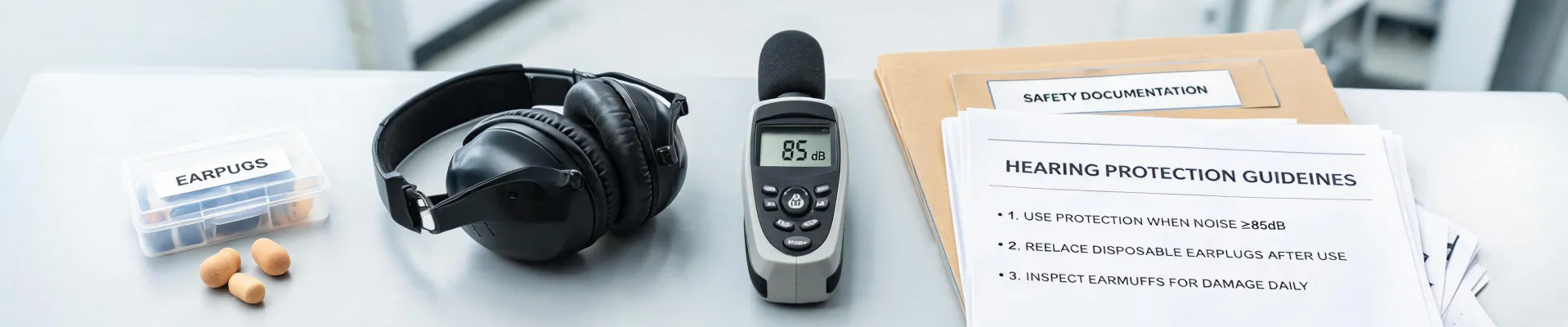
OSHA’s 1910.95 standard requires a hearing conservation program when noise exposure reaches 85 dBA as an 8-hour time-weighted average, and requires hearing protection at 90 dBA TWA (osha.gov, accessed January 2025). NIOSH recommends keeping exposure below 85 dBA. That means whatever you buy has to fit into a documented program.
Max Lite is simple to document: one SKU, known NRR, easy to stock. Impact Sport adds variables: batteries, charging if you use the rechargeable version, and user training on volume controls. I now verify invoicing and documentation before placing any order. In 2023, I found a great price from a new vendor—$0.02 per pair cheaper than our regular supplier. Ordered 20,000 pairs. They couldn’t provide a proper invoice, handwritten receipt only. Finance rejected the expense report. I ate $400 out of the department budget. Now I check whether a vendor can support our hearing conservation paperwork before I chase a lower unit price.
Then there’s the consumer question: can you buy loop earplugs in store? As of January 2025, Loop pushes direct online purchase on its site, and retail availability is spotty. Some electronics shops and airport stores carry them. But for a workplace hearing conservation program, I need documented NRR and ANSI test data. Loop earplugs are popular for concerts and focus, but I don’t standardize on them for industrial noise. If an employee asks, I tell them to check Loop’s site and local retailers, then bring me the NRR data if they want reimbursement.
Conclusion: Max Lite is easier to administer. Impact Sport requires more management, but it can be worth it in mixed-use environments.
Dimension 4: The Unexpected One—Employee Acceptance
This is the dimension that surprised me most. People think the highest NRR wins. Actually, comfort wins because comfort drives consistent use. An NRR 30 earplug that stays in a pocket protects nobody. An NRR 22 earmuff that someone actually wears all shift can deliver better real-world protection.
When we ran a trial in Q3 2024, we gave 40 warehouse employees both options. The Max Lite users liked the low profile and the fact that they could wear them under a hard hat. The Impact Sport users liked not having to roll foam plugs with dirty hands. But the Impact Sport users also complained about batteries and sweat. The Max Lite users complained about pressure if they inserted them too deep. We ended up stocking both.
Honestly, I’m not sure why some crews burn through foam earplugs faster than others. My best guess is fit and training. If someone never learned to roll a foam plug correctly, they will hate it and lose it. That is a training cost, not a product cost.
Which One I Buy Now
I don’t buy one winner for every situation. I buy by scenario:
- All-day high noise (90+ dBA): Howard Leight Max Lite earplugs. Lower TCO, higher NRR, easier compliance. Pair with fit testing and training.
- Intermittent noise with communication needs: Howard Leight Impact Sport earmuffs. Higher upfront cost, but one pair can replace many foam pairs. Budget for batteries and replacements.
- Mixed environments: Stock both. Let supervisors assign by task.
- Personal focus or office use: Loop earplugs may be fine, but verify NRR and retail availability. For OSHA programs, stick with documented industrial PPE.
My final TCO checklist: unit price, replacement rate, batteries, hygiene supplies, training time, compliance paperwork, and employee acceptance. The lowest quote is rarely the lowest cost. If you manage ordering for a company, calculate the cost per protected shift, not the cost per box.
Prices and availability as of January 2025. Verify current pricing and regulatory requirements with Honeywell Howard Leight, OSHA, and your safety distributor.

Maeve Callahan
Maeve Callahan is a head-protection analyst covering Type I and Type II hard hats, climbing-style safety helmets, bump caps, chin straps, suspensions, liners, and face-shield carriers. She applies ANSI Z89.1, EN 397, and EN 12492 criteria while comparing impact attenuation, penetration resistance, lateral deformation, electrical class, retention strength, field of vision, mass, fit range, and temperature conditioning. Her guides help EHS teams, contractors, utilities, and buyers select helmet systems for overhead hazards, work at height, electrical exposure, accessory compatibility, and worker acceptance.