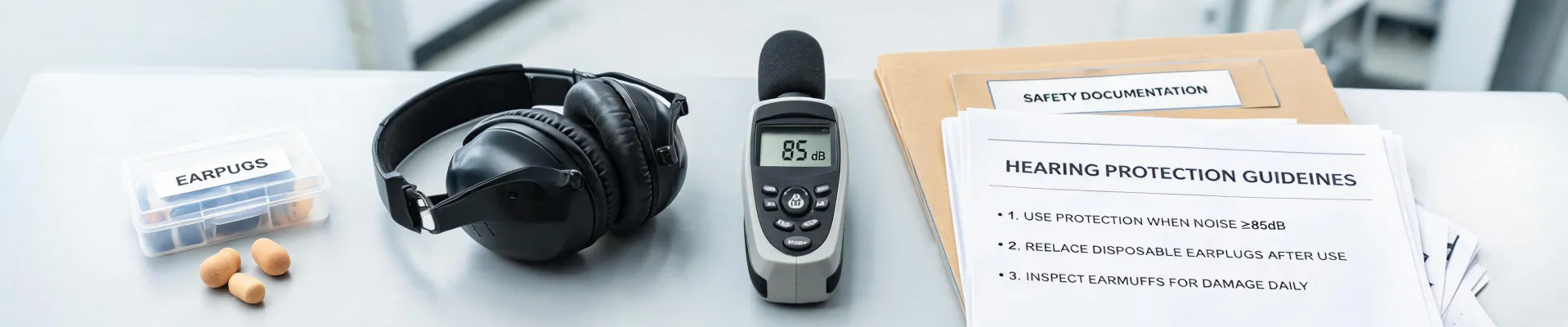
Rush fees feel like a waste—until they save your skin
Look, I get it. When you're approving purchase orders for a dozen different PPE categories, adding a rush fee feels like throwing money at something that should just show up on time. I've been there. But after five years in this role—managing orders for 400 employees across three facilities—I've settled on a rule: for any PPE item that directly impacts safety compliance or worker availability, I pay the premium for guaranteed delivery. Every single time.
And no, this isn't about being risk‑averse for the sake of it. It's about understanding what a missed deadline really costs—and why “cheap” shipping is often the most expensive option you can choose.
Lesson #1: The cost of delay is always higher than the rush fee
My first year on the job, I placed an order for Howard Leight Max earplugs (NRR 33 dB) and a batch of steel‑toe boots. The vendor offered free standard shipping. I took it. Delivery estimate: 7‑10 business days. Fine, we had stock—or so I thought.
Day 9 came. No shipment. Day 12: still in transit. Day 15: our quarterly safety audit was scheduled, and we needed new earplugs on every workstation. The auditors flagged us for insufficient PPE inventory. That cost us a corrective action report and hours of management time. The “free” shipping turned into about $2,800 in indirect costs (lost productivity, compliance risk, and my VP's time).
“I'm not saying budget shipping is always bad. I'm saying it's a gamble—and when the stakes include worker safety or a regulatory deadline, you're better off buying certainty.”
Now, whenever I order critical items—like Howard Leight Impact Sport Bluetooth earmuffs, welding helmets, or any respiratory protection—I budget for expedited delivery. The fee is typically $30–80 extra. Compared to the alternative? That's nothing.
Lesson #2: Emergencies don't follow your calendar
Here's the thing: even the best procurement plan hits surprises. A machine goes down; a new hire starts unexpectedly; a contractor forgets to bring their gear. Two months ago, our maintenance team told me they needed a dozen welding helmets by Thursday—today was Tuesday. Standard lead time was five days. Rush delivery (next‑day) cost an extra $52 per helmet.
Was I annoyed? Honestly, a little. But then I thought about what happens if we say “no.” That job would be delayed by a week, costing at least 40 hours of labor across the crew. The math was blindingly obvious.
So I paid. The helmets arrived Wednesday afternoon. The team finished on schedule. That $624 in rush charges saved roughly $6,000 in project delays. You do the math.
Dodged a bullet? Basically. But I'll take that feeling every time.
Lesson #3: Reliability is the product you're really buying
Let's talk about the brand itself. When I specify Howard Leight Max earplugs NRR 33 dB, I'm not just buying foam. I'm buying the highest noise reduction rating available, backed by decades of testing. The same logic applies to delivery speed: when you pay for rush, you're buying a guarantee that the item will arrive when promised—not “probably” or “usually.”
I've dealt with vendors who offered “cheaper” rush options that still missed the window. The most frustrating part: you'd think paying extra would guarantee performance, but some companies treat rush as “priority processing” without a binding commitment. So now I only use suppliers with explicit delivery guarantees for expedited orders. Yes, they cost more. Yes, it's worth it.
And before you ask: why is my fire alarm blinking red? It's the same principle. When that red light flashes, you respond immediately—you don't weigh whether to call the fire department. Emergency signals demand certainty. A rush order for PPE in a time‑sensitive situation is no different.
What about the skeptics?
I know what some of you are thinking: “If you plan better, you won't need rush orders.” Fair point—to an extent. But the reality is that procurement for a multi‑site operation always has variables beyond your control. Supplier stockouts, shipping carrier delays, last‑minute safety directives from regulators. Even with perfect planning, I've faced at least three legitimate emergencies a year.
Another objection: “The rush fee is pure profit for the vendor.” Maybe. But so is the insurance premium you pay for your car—and you still buy insurance, don't you? Think of rush shipping as insurance against operational downtime. The premium feels wasteful until you need it. Then it's a bargain.
Bottom line
Paying for guaranteed delivery on critical PPE isn't an expense—it's a risk‑management strategy. Whether you're ordering Howard Leight Impact Sport Bluetooth earmuffs for a noisy environment or steel‑toe boots for a construction crew, the time‑certainty premium ensures your people have what they need when they need it. And that matters a lot more than a $50 shipping charge.
So next time you're tempted to hit “standard shipping” on a deadline‑sensitive safety order, ask yourself: Can I afford to be wrong? If the answer is no, pay the premium. Trust me on this one.

Maeve Callahan
Maeve Callahan is a head-protection analyst covering Type I and Type II hard hats, climbing-style safety helmets, bump caps, chin straps, suspensions, liners, and face-shield carriers. She applies ANSI Z89.1, EN 397, and EN 12492 criteria while comparing impact attenuation, penetration resistance, lateral deformation, electrical class, retention strength, field of vision, mass, fit range, and temperature conditioning. Her guides help EHS teams, contractors, utilities, and buyers select helmet systems for overhead hazards, work at height, electrical exposure, accessory compatibility, and worker acceptance.