How a 3 AM Phone Call Changed What I Think About Safety Gear
I'm not really a logistics guy. My title is 'Operations Coordinator' for a mid-sized industrial maintenance contractor, but what that really means is I'm the person who gets called at 3 AM when something goes wrong. I've been doing this for 7 years now, handled maybe 200+ rush orders—from missing bolts to full-scale PPE replacements. But nothing hit me quite like what happened back in October 2024.
The call came in at 2:47 AM on a Tuesday. One of our crews was starting a night-shift cleanup at a chemical plant, and their supervisor had just discovered the PPE shipment we'd sent over was... incomplete. Wrong size steel toe shoes. Missing the Howard Leight earplugs we'd specified. A few respirator filters that didn't match the cartridges. You get the picture—a real mess.
Worse part: the job was scheduled to start at 6 AM. I had about 3 hours to fix it.
(I should mention: this wasn't our regular vendor. We'd switched to a discount supplier three months earlier trying to cut costs by about 15%. Seemed smart at the time.)
The Race Against the Clock
So I'm sitting there at 3 AM, coffee in hand, staring at my phone. I knew the discount vendor couldn't help—they were 2-day delivery minimum. My options were basically: find a local supplier that opens early, or call our old vendor and beg.
I called three places. First one: 'We open at 8, buddy.' Second one: 'We've got steel toe boots, but no Howard Leight earplugs in stock—will Honeywell Lites work?' Close enough, honestly. But the third call was a local safety equipment distributor I'd used years ago. Guy answered on the second ring.
'I need 12 pairs of steel toe shoes, size 8 to 13. 200 pairs of Howard Leight Laser Lite foam earplugs. And a box of respirator filters for the 3M 6000 series. By 5:30 AM.'
There was a pause. Then: 'We've got most of that. The boots we have in stock are Wolverine, not the budget brand you were buying. They're $95 a pair instead of $55. The earplugs? Same Howard Leight you wanted—but we've got the bulk 200-pair boxes for $18 each. Pickup in 45 minutes.'
I crunched the numbers fast. The budget boots we'd been buying were $55. The ones we needed now? $95. 12 pairs = $1,140 vs $660. Plus the rush pickup fee he'd tack on—$75. The earplugs were actually cheaper in bulk than what we'd been paying per box. Go figure.
I said yes. I didn't have a choice.
But here's the thing: I was annoyed. I was paying $500 more than I'd budgeted for this job. My boss was going to ask questions. The whole reason we'd switched vendors was to save money.
The Moment Everything Changed
I drove to the distributor at 4:30 AM. Waited while they pulled the order. The guy—let's call him Steve—was surprisingly chipper for that hour. He showed me the boots.
'Feel the sole,' he said.
I picked one up. It was heavier than the budget boots we'd been using. The rubber was thicker. The steel toe cap felt more substantial. The stitching was clean, no loose threads.
'These are ANSI-rated for electrical hazard protection,' Steve said. 'Your budget boots weren't.'
I hadn't even thought to check. The job was at a chemical plant. Did they require EH-rated footwear? I honestly had no idea. But the fact that I'd just assumed all steel toe boots were basically the same... that was embarrassing to admit.
Then he showed me the earplugs.
'Howard Leight Laser Lites—NRR 32. The ones you were getting from the discount vendor were NRR 29, right?'
I blinked. 'How'd you know?'
'Because I've seen this a hundred times. Budget suppliers substitute lower-rated products to hit price points. Same brand name, but different model. Same box sometimes. It's a common trick.'
I pulled out my phone and checked the order confirmation from the discount vendor. He was right. The 'Howard Leight earplugs' we'd been ordering were the Fusion model, NRR 29, not the Laser Lites we'd specified in the contract. I hadn't caught it.
What I Learned From That Mistake
I got the gear to the site by 5:45 AM. The crew started on time. The job went fine. But I couldn't shake what had happened.
Here's the bottom line: I'd been so focused on the line-item cost—$55 boots vs $95 boots—that I'd ignored what that difference actually bought. The $95 boots had better safety ratings, better materials, and frankly, felt like they'd last twice as long. The $55 boots? They were the cheap option. Period.
When I compared our Q3 and Q4 results side by side—same projects, same requirements, but different PPE vendors—I finally understood why the details matter so much. We'd 'saved' about $1,200 per quarter on boot costs. But we'd spent an extra $800 on rush orders to fix sizing issues, $450 on expedited shipping for missing items, and God knows how much in management time dealing with complaints.
The crew noticed the difference too. Within two weeks, I had three guys specifically ask me to keep ordering 'the good boots.' One of them said: 'I thought all steel toes were the same. These actually don't kill my feet after 10 hours.'
That's when it clicked. The quality of the PPE wasn't just a safety issue—it was a brand perception issue. When I handed a crew member a pair of flimsy, uncomfortable boots or cheap earplugs that felt like they'd fall out, I was telling them: 'We don't care about your comfort.' That message gets around.
I'm not a safety engineer, so I can't speak to the technical differences in impact protection between budget and premium boots. What I can tell you from a procurement perspective is: the $40 difference per pair translated to noticeably better crew morale and fewer complaints. That's a real, measurable outcome.
The Real Cost of Cheap PPE
Let me put some numbers on this. Based on what I've seen managing 200+ rush orders over the last few years:
- Budget steel toe boots ($55-65): usually last 6-8 months before the sole separates or the toe cap starts showing wear. Replacement frequency: high.
- Mid-range boots ($80-110): typically last 12-18 months. Better materials, better comfort. Lower turnover cost.
- Premium boots ($120+): can last 2+ years, but you pay for features you might not need.
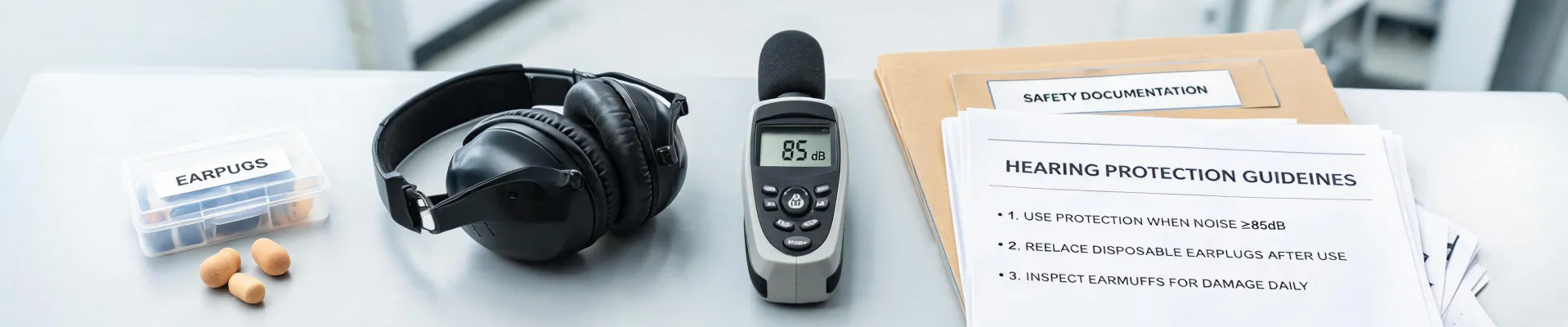
Now, earplugs are a different story. The cost difference between NRR 29 and NRR 32 Howard Leight models is maybe $2-3 per box of 200. But in a plant with 85dB ambient noise, that 3dB difference in protection matters. It's the difference between 'just barely acceptable' and 'comfortably protected for a full shift.'
The most frustrating part of all this: the same issues kept recurring despite switching vendors. You'd think specifying 'Howard Leight Laser Lite earplugs, NRR 32' in writing would prevent substitutions. But interpretation varies wildly—some suppliers just send whatever they have in stock with the brand name on it.
After the third time we got the wrong model, I was ready to go back to our original distributor permanently. What finally helped wasn't a policy change—it was admitting that our 'cost savings' were an illusion. We were spending the difference on expedited shipping, management time, and crew dissatisfaction.
I have mixed feelings about it, honestly. On one hand, the budget vendor saved us money on paper. On the other, the operational chaos and quality issues cost us more than we saved. I compromise now with a simple rule: core PPE goes through a trusted distributor; consumables can go through discount channels.
Practical Takeaways
If you're managing PPE procurement and wondering whether the premium is worth it, here's what I'd say based on actual experience:
- Check the specs, not just the brand. 'Howard Leight earplugs' could mean a dozen different models with different NRR ratings. Verify each time.
- Factor in hidden costs. That $40 cheaper pair of boots might cost you $80 in management time dealing with sizing exchanges and complaints.
- The crew notices. Cheap PPE sends a message about how much you value their safety and comfort. That message has real retention implications.
- Build a relationship with a good distributor. The guy who answered the phone at 3 AM? He saved my job that night. That's worth paying a premium for.
Oh, and one more thing: check your current orders. Right now. Go look at what you're actually getting vs what you specified. The difference might surprise you.
Prices as of October 2024—verify current rates with your vendors before quoting.

Jane Smith
I’m Jane Smith, a senior content writer with over 15 years of experience in the packaging and printing industry. I specialize in writing about the latest trends, technologies, and best practices in packaging design, sustainability, and printing techniques. My goal is to help businesses understand complex printing processes and design solutions that enhance both product packaging and brand visibility.