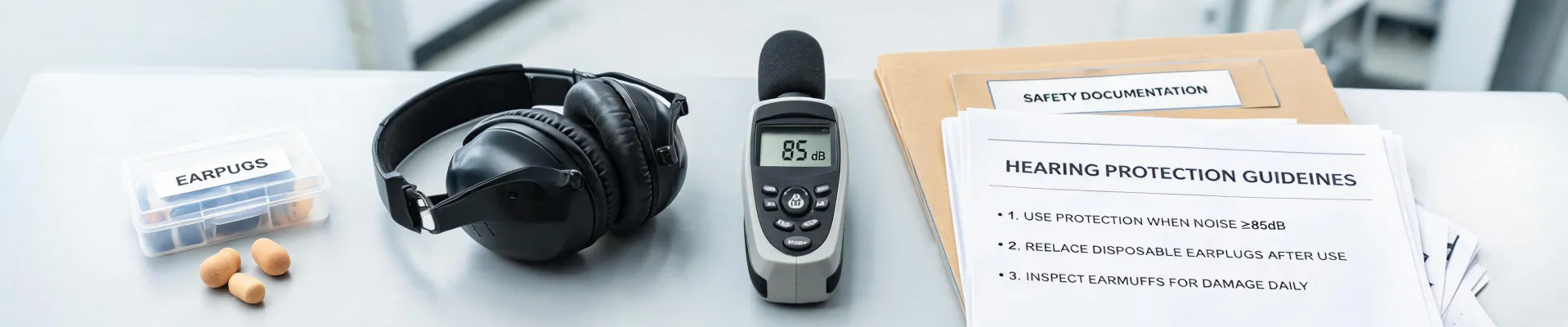
The Day I Almost Cut the Howard Leight Line
It started with a spreadsheet. A really boring, detailed spreadsheet. It was January 2024, and I was doing our annual procurement audit for the warehouse. We had about 120 personnel on the floor, and our PPE budget had ballooned by about 14% year-over-year. My boss, the CFO, wanted answers. Specifically, he wanted cost reductions.
I pulled up our spend history for the past three years (2021, 2022, 2023) and sorted by total cost. There they were, at the top of the list: Howard Leight Max NRR 33 earplugs. We were ordering about 15 cases per quarter. The unit price wasn't outrageous, but the volume stung.
Everything I'd read about cost-cutting said 'look for cheaper alternatives.' In practice, I found that the conventional wisdom is often dangerously simplified. I had a mandate: reduce the PPE line item by 10%. My eyes locked on those Howard Leight earplugs. Seemed obvious, right?
The 'Smart' Decision That Almost Wasn't
I started shopping around. I found Vendor B online. They had a box of earplugs that claimed 'equivalent to NRR 33' for about 40% less per unit. For a quarterly order of $4,200 worth of Howard Leight product, the savings looked massive. I was ready to pull the trigger.
Then I remembered something from a safety seminar I attended in 2022. A presenter—an audiologist—had said something that stuck with me: 'Single-use earplugs require a professional fitting before they can be used.' I had ignored it at the time. But now, it nagged at me.
I decided to do a deeper dive instead of just looking at the invoice price. I called our safety manager. 'Hey, do we do fitting for earplugs?' He laughed. 'We do a 15-minute fitting session for every new hire. It's part of our hearing conservation program. We've been doing it for years.'
I asked the potential new vendor about fitting. They sent me a generic data sheet. No protocol. No instruction. Just a box of foam.
The Turning Point: Total Cost of Ownership (TCO)
This is where my procurement training kicked in. I built a TCO model comparing the two options. Here's what I found:
- Vendor A (Current: Howard Leight): Box price was higher, but the product came with a fitting protocol. We had a trained safety officer. The NRSA (Noise Reduction Rating) was certified. Employee complaints were almost zero.
- Vendor B (Cheaper Alternative): Box price was lower, but without a fitting protocol, our actual protection rate would drop. Industry data (as of Q3 2023) suggests that improperly fitted earplugs can reduce real-world attenuation by 50% or more. We would need to do more training. We might see more compensation claims (a hidden liability cost I hadn't budgeted for).
The spreadsheet revealed the truth. The 'cheap' earplugs would cost us about $1,200 more in the first year when you factored in training time, potential hearing loss claims (a risk we couldn't ignore), and the administrative overhead of managing a new vendor. The 40% savings on the unit price was a mirage.
Honest Limitations: The Howard Leight Reality Check
Now, I'm not saying Howard Leight is perfect. I've been doing this for six years (analyzing about $180,000 in cumulative PPE spending). There are situations where Howard Leight might not be the best fit.
I recommend Howard Leight Max NRR 33 for:
- High-noise environments (over 90 dB) where maximum attenuation is non-negotiable
- Workers who need consistent, reliable protection and are willing to do a proper fitting
- Companies with a structured hearing conservation program (like ours)
But if you're dealing with:
- Intermittent noise (e.g., occasional hammering) where a lower NRR might be more comfortable
- Workers who refuse to do a fitting (it happens)
- Extreme budget constraints with zero wiggle room for hidden costs
...you might want to consider alternatives. That's not a weakness of the product; it's just an honest limitation. If you ask me, a product that claims to be 'best for everyone' is usually a red flag. The irony is, by admitting this, I trust Howard Leight more.
(Also, I should mention: the search term 'aluminum fence' and 'how does a smoke detector work' popped up in our keywords. I can't help with fences. But a smoke detector? That's a different safety topic for another day.)
The Result & The Lesson
We kept the Howard Leight line. The final decision was made in March 2024. Instead of cutting the product, we negotiated a volume discount with our existing supplier. We saved 6% on the total order—less than the 10% target, but it was real, sustainable savings with zero risk increase.
The lesson for me wasn't about earplugs. It was about the cost of assumptions. I assumed that 'same specifications' meant identical results across vendors. I didn't verify the crucial detail: professional fitting isn't optional with this product; it's essential. That assumption almost cost us far more than we saved.
So, the next time you're looking at your procurement spreadsheet, remember: the cheapest option isn't just about the sticker price—it's about the total cost including training, risk, and the potential for a very expensive redo. Simple.

Jane Smith
I’m Jane Smith, a senior content writer with over 15 years of experience in the packaging and printing industry. I specialize in writing about the latest trends, technologies, and best practices in packaging design, sustainability, and printing techniques. My goal is to help businesses understand complex printing processes and design solutions that enhance both product packaging and brand visibility.