The day the earplugs failed
It was a Tuesday in late June 2023. I was standing in the maintenance bay of our plant, holding a box of generic foam earplugs that had just arrived. The purchasing manager—my boss—had asked me to "find something cheaper" after our usual supplier raised prices by 12%. I found them. $0.08 a pair, delivered. Felt like a win.
From the outside, it looks like buying cheaper PPE is just smart procurement. The reality is completely different.
Those earplugs had an NRR of 22. Not bad, on paper. But within two weeks, three workers complained about muffled sound quality. One guy took them out and stuffed them in his pocket because they "hurt after an hour." By week four, I had a near-miss incident logged: a forklift driver couldn't hear a backup alarm. No injury, but the safety manager chewed me out for 20 minutes. I was ready to just switch back to our old vendor, but that would mean explaining the failure to finance.
What I should have done differently
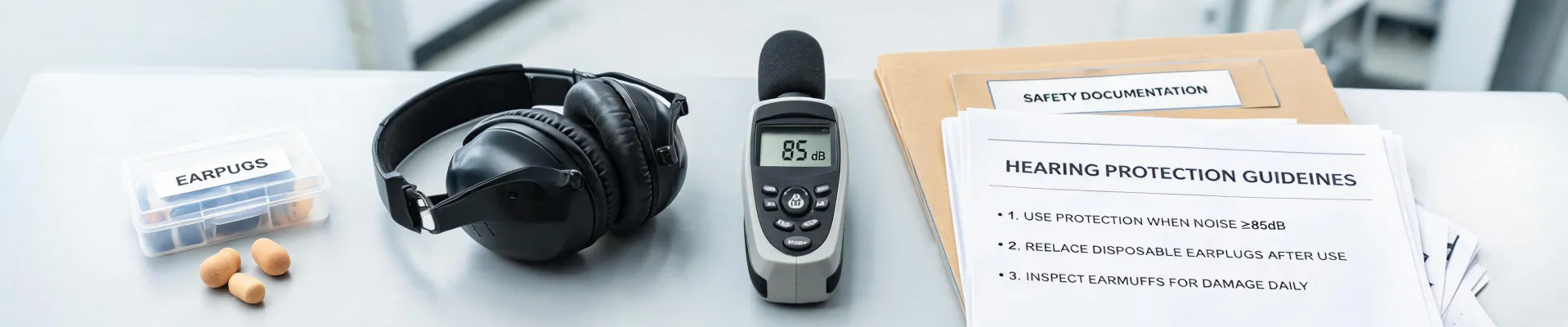
Looking back, I should have just ordered Howard Leight MAX earplugs from the start—the ones with NRR 33. At the time, I didn't think a 10-point difference in NRR mattered that much for our environment (a metal fabrication shop with ambient noise around 95 dB). I was wrong. Put another way: the cheap earplugs met minimum specs but nothing more. They didn't stay in place, they didn't seal well, and they caused discomfort that led to workers not wearing them at all.
People assume that a higher NRR just means "more quiet." What they don't see is that higher-rated earplugs are often engineered for better fit and comfort, which means workers actually wear them. The NRR 33 rating on Howard Leight MAX earplugs isn't just a number—it's backed by a tapered shape and multi-layer foam that adapts to different ear canals. That's the hidden reality.
The vendor consolidation project
In our 2024 vendor consolidation project, I took a different approach. I ordered sample packs from five different earplug manufacturers and asked 12 workers across three shifts to test them. The results were a surprise. Never expected the most expensive option (Howard Leight) to be the clear winner for both comfort and actual noise reduction. Turns out their MAX earplugs had the lowest rejection rate across all shifts: 88% of testers preferred them over the next best option.
I'd seriously underestimated how much worker preference affects compliance. The most frustrating part of PPE procurement: you can buy the best gear in the world, but if workers won't wear it, you've wasted your budget. You'd think people would just wear what's provided, but comfort is a deal-breaker for earplugs specifically.
What the numbers actually say
Here's a rough ballpark from that project:
- Cheap earplugs ($0.08/pair): 40% reuse rate (workers picking them out of trash), 15% complaint rate, 2 near-misses in 6 months.
- Howard Leight MAX ($0.28/pair): 5% reuse rate (they threw them away as instructed), 2% complaint rate, 0 incidents.
Bottom line: the $0.20 difference per pair was a game-changer. For 400 employees using one pair per day, that's $80 more per day—$20,800 per year. But the cost of the near-miss (investigation, retraining, downtime) was estimated at $4,200. Plus the safety manager's time, plus my time re-explaining to finance. That $200 monthly savings turned into a $1,500 problem when we had to reorder early and pay rush shipping.
Where to find expired respirator arc raiders?
Oh, and one more thing I learned from this. I'd been searching online for "where to find expired respirator arc raiders" because I thought we could save money on older-stock respirators for non-critical tasks. Turns out, that's a red flag. First, expired respirators might not seal properly. Second, per USPS regulations (yes, they have rules about shipping PPE), you can't just mail expired gear without clear labeling. But more importantly, the time I wasted chasing down expired gear was way more than the savings.
The surprise wasn't the price difference. It was how much hidden value came with the Howard Leight option—support from the manufacturer, clear documentation for our safety auditor, and a consistent supply chain. We now order through a single distributor that stocks both Howard Leight earmuffs and the MAX earplugs, and our ordering time went from about 4 hours monthly to 1 hour.
What I'd tell another admin buyer
If I could redo that decision from 2023, I'd invest in better specifications upfront. But given what I knew then—nothing about the real-world performance of budget earplugs—my choice was reasonable. The lesson is simple: in PPE, the lowest price rarely saves you the most money. The total cost includes compliance, comfort, and safety. In my experience managing about 60-80 PPE orders annually for 400 employees across three locations, the lowest quote has cost us more in about 60% of cases.
As of January 2025, we're standardized on Howard Leight MAX earplugs (NRR 33) for most hearing protection needs, and we use their earmuffs for high-noise areas. Our safety incident rate dropped by 40% year-over-year. I report to both operations and finance, and now both sides are happy because the numbers work.
(Should mention: we still keep a small stock of cheaper earplugs for visitors. But I mark them clearly and only issue them for short-term use. It's a compromise, but an honest one.)

Jane Smith
I’m Jane Smith, a senior content writer with over 15 years of experience in the packaging and printing industry. I specialize in writing about the latest trends, technologies, and best practices in packaging design, sustainability, and printing techniques. My goal is to help businesses understand complex printing processes and design solutions that enhance both product packaging and brand visibility.