-
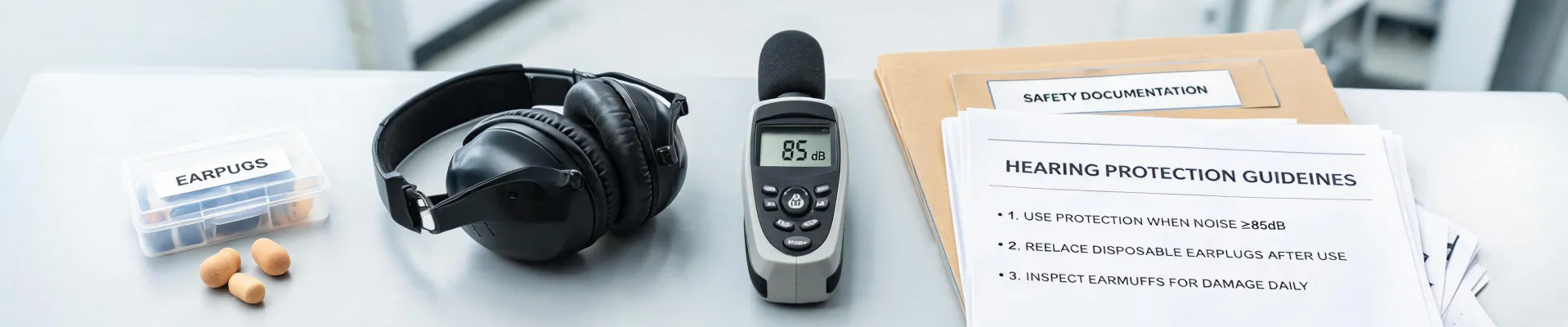
Stop buying PPE like you're just checking a box.
-
Mistake #1: Chasing the highest NRR without thinking about real-world use.
-
Mistake #2: Ignoring the gap between 'PPE' and 'E' in 'PPE Meaning'.
-
Mistake #3: Assuming 'impact sport' earmuffs are the same as industrial ones.
-
Mistake #4: Forgetting the TSA sometimes enters the chat.
-
Mistake #5: Overlooking the spec sheet for the 'Howard Leight MAX'.
-
Mistake #6: Thinking all 'safety glasses' and 'coveralls' are the same.
-
Mistake #7: Forgetting to check for 'Halotron' vs. 'Halon' extinguishers.
-
Mistake #1: Chasing the highest NRR without thinking about real-world use.
-
So what's the real cost of these mistakes?
Stop buying PPE like you're just checking a box.
I've been handling PPE procurement for mid-size manufacturing firms for eight years now. Started back in 2017. And in that time, I've personally made—and meticulously documented—over $12,000 worth of easily avoidable mistakes.
Most of them came down to the same thing: I bought equipment to satisfy a requirement, not to solve a problem. A pair of earplugs has an NRR rating. A pair of gloves has a cut-resistance level. But if you don't know how those numbers translate to your specific workers and environment, you're just throwing money away.
Let me walk you through my seven biggest screw-ups. If you're in B2B purchasing or safety management, this might save you from doing what I did.
Mistake #1: Chasing the highest NRR without thinking about real-world use.
My first year, I ordered 500 pairs of Howard Leight MAX earplugs. NRR 33. Top of the line. Felt good about it.
They were uncomfortable for half my workforce. People wore them loose or took them out. The actual protection dropped way below the rated value.
Here's what I learned: An NRR 33 earplug worn incorrectly often provides less protection than an NRR 25 earplug worn properly. The ANSI/OSHA standards (OSHA 1910.95) even require you to derate the NRR by 50% for earplugs in real-world compliance calculations. I was so focused on the packaging that I forgot the human factor.
What I do now: I order a variety pack first. Let workers test them. Then place the bulk order based on actual fit and comfort data, not just the spec sheet.
Mistake #2: Ignoring the gap between 'PPE' and 'E' in 'PPE Meaning'.
The acronym "PPE" gets tossed around so much that people forget what the letters stand for. Personal Protective Equipment. The 'personal' part matters.
I once ordered 100 pairs of standard latex gloves for a team that did mostly assembly work. The problem? Two of the workers had latex allergies. One guy's hands broke out in rashes within eight hours. That cost us a replacement order, a rush fee, and a lot of employee trust.
I want to say the reorder was for nitrile gloves and it cost about $450 extra, but don't quote me on the exact number. The principle stands: the 'one-size-fits-all' approach to PPE is usually wrong. You have to account for allergies, hand sizes, dexterity needs—factors that aren't on the product page.
Mistake #3: Assuming 'impact sport' earmuffs are the same as industrial ones.
I got a request for "Howard Leight Impact Sport" earmuffs. The user specifically said "Impact Sport." I ordered them, thinking they were a ruggedized version.
They are not. Impact Sport earmuffs are designed for shooting ranges and hunting. They have directional microphones to let you hear ambient sounds while blocking gunshot noise. That's great for a shooting range. In a factory with constant machinery noise, they perform differently—and not always better for the specific hazard.
That mistake was caught before we distributed them, but it wasted a week of return processing and re-ordering.
Mistake #4: Forgetting the TSA sometimes enters the chat.
Look, this one isn't about industrial safety directly, but it came up once: Can you bring pepper spray through TSA? The answer is no—it's prohibited in carry-on bags. But checked baggage with certain restrictions? That's a different story for security equipment.
More generally, if your people travel with PPE (like earplugs or small tools), you need to be aware of TSA regulations. I once had a $600 order of specialized gloves held up because the shipping agent flagged the adhesive as "hazardous." Five minutes of research upfront would have saved a week of delays.
Mistake #5: Overlooking the spec sheet for the 'Howard Leight MAX'.
Back to the MAX earplugs. The spec sheet says: NRR 33, polyurethane foam, tapered shape. Standard stuff, right?
Wrong. The Howard Leight MAX earplugs NRR 33 specification also notes: They are designed for larger ear canals. The tapered shape aids insertion, but the final fit is bigger than other foam plugs. For people with smaller ear canals (often women or smaller-framed individuals), they don't seal properly.
I didn't read that part. I ordered 500 pairs. About 150 of them ended up unused because they didn't fit. I had to write that off as a learning experience.
Now, I always request the manufacturer's documentation—the real documentation, not just the marketing copy—before a bulk order. You'd be surprised what you miss.
Mistake #6: Thinking all 'safety glasses' and 'coveralls' are the same.
I made a bulk order for "safety glasses" and "coveralls" from a single supplier. They arrived. They were fine. But they weren't great.
The glasses fogged up in our humid environment. The coveralls had poor stitching. We ended up replacing them within six months. Total cost of the reorder plus wasted inventory: roughly $1,000.
The lesson: Don't treat PPE as a commodity. It's performance equipment. If your environment is hot, get anti-fog glasses. If your work involves sparks, get flame-resistant coveralls. The generic option is rarely the best option for your specific conditions.
Mistake #7: Forgetting to check for 'Halotron' vs. 'Halon' extinguishers.
This one is niche, but it matters: I once ordered a "Halon fire extinguisher" for an electronics bay. The supplier delivered one labeled "Halotron." I almost sent it back, thinking it was a mistake.
It wasn't. Halotron is the modern, environmentally safe replacement for Halon. Both are clean agents (no residue) for sensitive electronics. But if I hadn't double-checked, I would have rejected a perfectly good extinguisher.
The point: Don't assume older names are better. Check the current standards (NFPA 10 in the US) and make sure your spec matches the current code.
So what's the real cost of these mistakes?
I've tracked it. Over eight years, my documented mistakes total about $12,000 in direct costs (wasted products, rush fees, returns) and probably double that in indirect costs (lost time, reduced safety compliance, employee frustration).
But here's the thing: Every single one of those errors could have been prevented.
I now maintain a 15-point checklist that I run before any order over $200. It includes:
- Does this spec match our actual work environment?
- Have I verified the exact meaning of every acronym (PPE, NRR, ANZI, etc.)?
- Does this fit the range of my workers, not just the average?
- Have I checked the manufacturer's full spec sheet?
- Is there a newer standard that changes the recommendation?
I can only speak to my context—mid-size B2B procurement in a single country. If you're dealing with international logistics or heavy construction, there are factors I'm not aware of. But the principle holds: Five minutes of upfront verification is cheaper than five days of correction.
That 15-point checklist has saved us an estimated $8,000 in potential rework in the last 18 months alone.
So stop buying PPE like you're just checking a compliance box. Understand the spec, fit it to your people, and verify the details. It's not just cheaper. It's safer. And that's the point.

Jane Smith
I’m Jane Smith, a senior content writer with over 15 years of experience in the packaging and printing industry. I specialize in writing about the latest trends, technologies, and best practices in packaging design, sustainability, and printing techniques. My goal is to help businesses understand complex printing processes and design solutions that enhance both product packaging and brand visibility.