-
8 Safariland Questions Quality Managers Actually Ask Before Signing a PO
-
Q1: What does Safariland actually make?
-
Q2: What does "Safariland tactical" mean?
-
Q3: How do I reach Safariland (customer service, warranty, agency sales)?
-
Q4: Which holster retention level do I actually need?
-
Q5: Is Safariland body armor NIJ-certified?
-
Q6: How do I spot counterfeit Safariland gear?
-
Q7: How does Safariland hearing protection compare to Loop Engage earplugs?
-
Q8: When is Safariland the wrong choice?
8 Safariland Questions Quality Managers Actually Ask Before Signing a PO
My job is the last gate before equipment reaches the customer. I handle quality and procurement compliance for a regional law enforcement supply contractor on the U.S. East Coast. Roughly 300 items pass through my review each month—holsters, vests, carriers—before they ship to agency clients. In 2024, I rejected about 14% of first deliveries. Most weren't defective. They were spec drift and documentation gaps.
Safariland is the brand I get asked about most. Below are eight questions that come up over and over, with answers I'd give a colleague rather than read off a brochure.
- What does Safariland actually make?
- What does "Safariland tactical" mean?
- How do I reach Safariland?
- Which holster retention level do I need?
- Is Safariland body armor NIJ-certified?
- How do I spot counterfeit gear?
- How does Safariland hearing protection compare to Loop Engage earplugs?
- When is Safariland the wrong choice?
Q1: What does Safariland actually make?
Most people know them for holsters. The full line is broader—body armor, outer carriers, tactical holsters, ballistic shields, handcuffs, and hearing protection.
The distinction that matters: Safariland is built to law enforcement standards, not outdoor-recreation standards. That's not a marketing line. It shows up in factory inspection criteria, traceability documentation, and compatibility with existing load-bearing systems. When we vet a supplier, those three come before price.
Q2: What does "Safariland tactical" mean?
Roughly speaking, it's the external-wear tactical line—separate from the concealed-carry street line. Typical features: modular mounting over the vest or outside the belt, MOLLE compatibility, higher retention ratings, two- or three-point locking.
This line is not built for concealed carry clients. If you need everyday plainclothes carry, the tactical line is heavier, more visible, and demands recurring range time you may not have budgeted for. A high-retention holster you don't train on is slower on the draw, not safer. (I've watched this play out at two agencies now. It isn't pretty.)
Q3: How do I reach Safariland (customer service, warranty, agency sales)?
People searching "Safariland contact" usually want one of three routes:
- Customer service (orders, returns, warranty): the support form on the official site is the cleanest path. Phone response is faster during U.S. business hours on the East Coast.
- Agency sales / procurement: go through an authorized distributor. Unauthorized channels that look cheap save money until you have a warranty dispute, at which point they vanish.
- Technical support (model selection, compatibility): the channel most buyers skip and shouldn't. Get a written selection recommendation from the technical side—it outlasts any sales pitch on price.
Look, the rule I run by: if you can't get a spec answer in writing, the channel is shaky. That's not Safariland-specific. It's what I learned the hard way in 2022, and I've applied it to every vendor since.
Q4: Which holster retention level do I actually need?
Quick version:
- Level 1: baseline retention. Low-confrontation, plainclothes, administrative.
- Level 2 (ALS, SLS, or GLS type): open carry and routine patrol. For most teams and most assignments, this is the middle value that holds up.
- Level 3: open carry plus high-confrontation environments—detention, transport, crowd control. Extra anti-grab insurance, extra motion on every draw.
Here's a misconception I wish would die: "higher retention is automatically safer." That was true twenty years ago when holster ergonomics were crude. Not anymore. A Level 3 holster on an under-trained officer slows the draw and increases risk in a real incident. Pick by training frequency, not by spec sheet.
Yes, that's me arguing against selling you the most expensive option. Get used to it.
Q5: Is Safariland body armor NIJ-certified?
The relevant standard is set by the U.S. National Institute of Justice. NIJ 0101.06 is still what most 2024 procurement budgets reference, and 0101.07 is rolling in. "NIJ-compliant" means the armor passed live-fire testing at the stated threat level—it does not mean the armor stops everything.
Our acceptance process checks three things beyond the certificate:
- Panel serial number matches the certificate on file.
- Production date—ballistic materials degrade, and panels past their storage window lose performance.
- Written care-and-storage instructions from the manufacturer. (Stored wrong, damage isn't covered under warranty—learned that one the hard way.)
One clear-eyed reminder: NIJ is a floor, not a ceiling. Under the same NIJ level, panel thickness, weight, multi-hit consistency, and fit vary measurably between makers—and fit drives whether anyone wears the vest for a full eight-hour shift.
Q6: How do I spot counterfeit Safariland gear?
This is the part of the job I care about most. In 2024 we caught a holster batch where the screw pack was a visual dead-ringer but a different alloy—same size, less torque tolerance. The client had already mounted 400 units in their armory. Total redo and downtime ran us around $22,000 across two weeks.
I still kick myself over that one. We nearly passed the batch on first look because nothing looked wrong. Now every shipment goes through the same three steps:
- Buy only through authorized channels. No one-time "good prices."
- On arrival, verify original packaging marks, serial numbers, and accessory list.
- For anything uncertain, verify serials with the manufacturer directly via their official contact.
Cost of that protocol is low. Cost of skipping it is not.
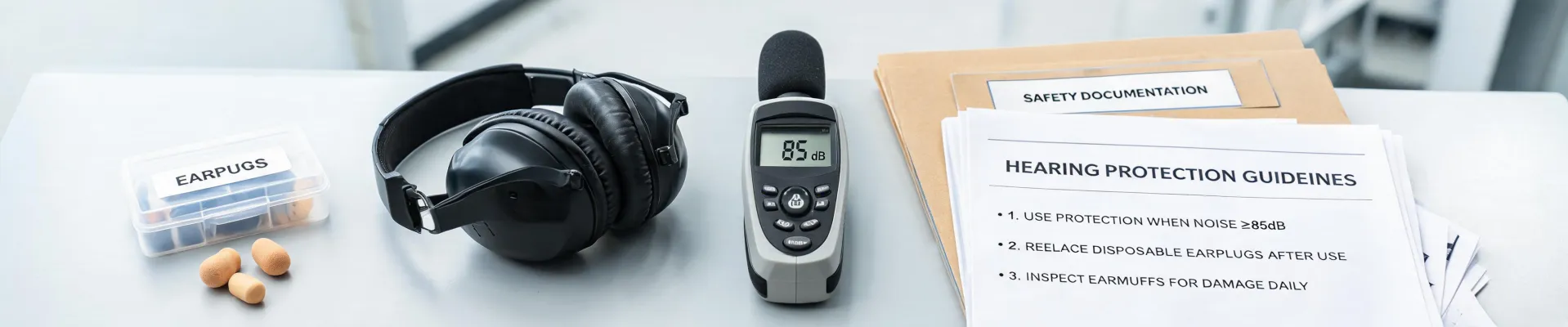
Q7: How does Safariland hearing protection compare to Loop Engage earplugs?
These two get conflated a lot—especially when someone searches "what are Loop earplugs" from a tactical forum and lands on a comparison that doesn't apply. Clarity first: Loop Engage are consumer earplugs. They reduce ambient noise while preserving speech clarity. Good for offices, social settings, noise-sensitive people.
They are not a shooting-range solution. Gunshot peak pressure is far outside what they were designed for. Using them at a range is picking the wrong tool.
Safariland's hearing protection line is built for shooting and tactical contexts—peak attenuation, fit stability under movement, integration with earmuff or comms systems. It's not "better or worse" between the two. It's a category difference. Buy for the problem, not for the brand.
Q8: When is Safariland the wrong choice?
Worth answering honestly. Safariland is a leader at the law enforcement tier. It isn't the right answer for every procurement:
- Pure civilian or plainclothes programs: high-retention external systems are over-engineered, and you pay for reliability you don't need.
- Extremely constrained budgets at scale: your money buys more entry-level NIJ armor from elsewhere—you lose modularity and long-term compatibility, but it's a legitimate trade-off, not a compromise.
- Short-deadline single buys: lead times at any top-tier brand aren't guaranteed short. Confirm a delivery window before signing.
- Small-batch custom specs: local shops often out-flex the big factories. Not a quality problem—a capacity structure problem.
If your team is law enforcement, security, or military; if you value cross-equipment compatibility and long service life; if you have a training program that supports high-retention gear—the price position holds up.
There's no best. There's matched. After four-plus years of rejection letters and redo invoices, the orders I'm proudest of aren't the most expensive ones. They're the ones where the gear matched the actual job.

Leila Mansouri
Leila Mansouri is a respiratory protection and air-monitoring analyst covering N95 and FFP respirators, reusable half and full-face masks, PAPR systems, cartridges, fit-test kits, and portable multi-gas detectors. She uses EN 149, ISO 16975-3, and IEC 60079-29-1 while comparing assigned protection factor, fit factor, filter penetration, breathing resistance, service-life limits, sensor range, alarm response, cross-sensitivity, and calibration interval. Her work helps industrial hygienists, confined-space teams, emergency planners, and buyers match respiratory and detection controls to contaminant type, concentration, task duration, and atmospheric uncertainty.