The First Bulk Order Was Easy. The Lesson Wasn't.
Back in early 2022, I placed our first bulk order for Howard Leight MAX earplugs with an NRR 33 dB rating. The whole process took about 15 minutes. I searched "howard leight max earplugs nrr 33 db," compared a couple of prices, picked the largest pack size, and went back to my other work. Done.
It wasn't done. A few months later, a routine safety observation revealed that less than half of our shop floor workers were actually wearing the earplugs we'd bought. The ones sitting in shirt pockets weren't protecting anyone. I had to understand why—and that took me far deeper than the spec sheet.
The Surface Problem: We Anchor on the Highest Number
There's a reason the search results for Howard Leight earplugs all highlight the NRR 33 rating. It's among the highest noise reduction ratings you'll find for earplugs. It's true, impressive, and dangerously easy to treat as a final answer.
The conventional wisdom in procurement is simple: higher NRR equals better protection, which equals less liability. Order the 33s, tick the compliance box, and move on to the next line item.
That logic isn't wrong. It's just incomplete—in a way that costs real time, money, and trust.
The Deeper Problem: Lab Ratings Don't Wear Earplugs
My education happened during a site visit in August 2022. The safety supervisor showed me what "properly fitted" actually means. (Should mention: I'd been assuming that if the package says NRR 33, the worker gets 33. He didn't laugh outright, but I saw him wince.)
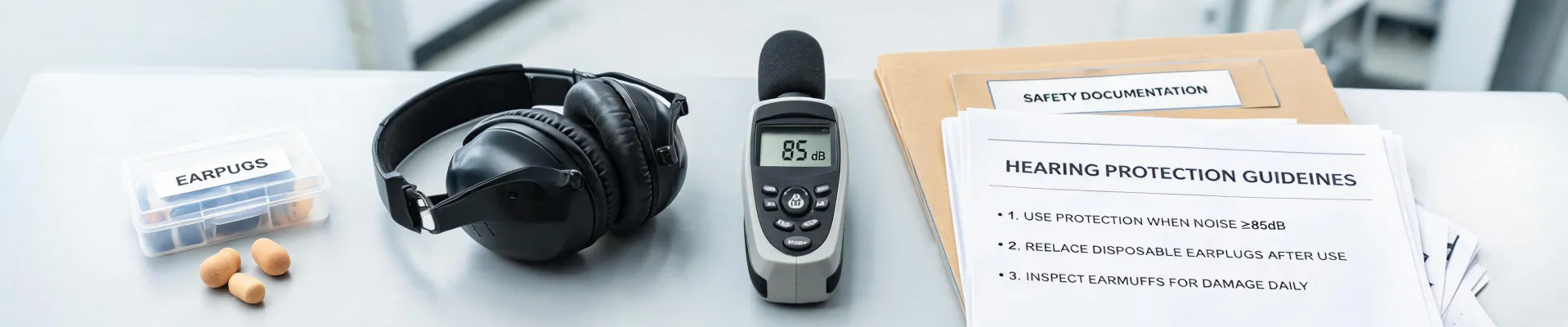
The NRR number is measured under laboratory conditions, with trained technicians fitting earplugs onto cooperative test subjects. Real workers are tired, in a hurry, and sometimes just don't want to wear ear protection. Nobody checks their fit at 6:30 in the morning.
Here's what actually determines the protection a worker gets:
- Fit quality. A foam plug that isn't rolled and inserted properly can lose 10 to 15 dB of its rated attenuation. A 33 dB earplug becomes a 20 dB earplug—which might not be enough for the environment.
- Consistency. The best earplug in the world does nothing sitting in a pocket. If workers find it uncomfortable or take it out for conversations and forget to reinsert it, the average protection drops fast.
- Material interaction. Some workers have narrow or unusually-shaped ear canals. Some work in hot, humid conditions where foam degrades. One-size-fits-all is a theory, not a practical reality.
Everything I'd read about hearing protection said the highest NRR rating should correlate with the lowest risk. In practice, I found that fit quality, worker behavior, and the specific environment matter more than the number on the box.
What Getting It Wrong Actually Costs
The financial exposure
OSHA's hearing conservation standard (29 CFR 1910.95) requires employers to implement a program when noise exposure reaches 85 dB over an 8-hour time-weighted average. Penalties for non-compliance are not small. As of January 2025, a single serious violation carries a maximum civil penalty of $16,131. Repeat offenders can face $161,323 per violation.
But fines are only part of the picture. Workers' compensation claims for hearing loss are expensive because the damage is permanent. Paying for a claim isn't a one-time medical bill. It's years of decreased quality of life and increased employer costs.
The mistake that got my attention
In 2021, we switched to a cheaper generic earplug, saving roughly $300 per order. (Sounded like a win at the time.) Then a worker developed an ear infection—possibly from the material, possibly coincidence. What followed was a doctor's visit, workers' comp paperwork, two weeks of modified duty, and a site manager who made it very clear that my "smart procurement decision" had cost him real time.
If I remember correctly, the all-in cost of that single incident was somewhere north of $2,400, including medical, admin time, and lost productivity. We could have bought three years' worth of the better earplugs for that amount.
That's when I stopped treating hearing protection as a pure unit-price decision.
The Stealth Cost: Workers Who Quietly Opt Out
The bigger issue—and the one no spreadsheet can show—was why our workers avoided wearing the earplugs in the first place. It wasn't laziness.
Some said the generic earplugs were stiff and uncomfortable. Some said they couldn't hear machine sounds or safety alarms with earplugs in. A few said they'd never been shown how to insert them correctly and just assumed earplugs "didn't work for them."
The same lesson applies across the PPE category. When I order Reebok safety shoes for our crews, I ask about the specific job site first—indoor concrete floors demand different soles than muddy outdoor work. And a friend who runs a fence contracting company told me something similar about hearing protection for his crew: gas-powered augers and circular saws are loud enough to cause permanent damage, but if the earplugs are uncomfortable or finicky, they end up in the truck's cupholder.
(And here's a fun thing about managing safety content: people land on our pages from search queries we'd never predict, like "how to get pepper spray off skin." It's a reminder that workers are out there trying to solve real safety problems on their own. Our procurement decisions need to support them, not add to the confusion.)
The root problem wasn't a bad product. It was a procurement model that assumed one size fits all and that no training was required.
What Actually Worked
I still order Howard Leight MAX earplugs—NRR 33 and all—for a large portion of our team. They're genuinely good earplugs: soft, slow-recovery foam that expands to fit most ear canals well. But we changed three things around them, and that's where the real improvement came from:
- We stopped buying one model for everyone. We now stock two or three different hearing protection options and let workers choose what fits their ears and their work environment. The unit cost went up slightly. The compliance rate went up significantly.
- We added a five-minute fit training at orientation. Roll the foam plug, pull the ear up and back, insert, check the seal. Nobody had ever shown most of our workers how to do this correctly.
- We started tracking usage instead of just inventory. We talked to workers about why they did or didn't wear hearing protection. The answers were practical and specific. (Surprise, surprise.)
When I compared our compliance data before and after those changes—same workforce, different approach—the difference was dramatic. Wearing rates went from under 50 percent to over 90 percent within three months. No product swap could have done that.
The Bottom Line
The 33 dB NRR rating on Howard Leight MAX earplugs is an excellent starting point. It's a real, verifiable, high-performance spec. But it's not what workers actually experience on a Tuesday afternoon when they're rushing between tasks and the earplug isn't comfortable—or they were never shown how to fit it properly.
Buying good hearing protection matters. Choosing the right options for your actual workers—and spending five minutes showing them how to use it—matters more.
I'd rather spend 10 minutes explaining this to another procurement person than watch them learn it the way I did. An informed buyer asks better questions, makes faster decisions, and avoids the $2,400 mistake I'd rather not repeat.

Maeve Callahan
Maeve Callahan is a head-protection analyst covering Type I and Type II hard hats, climbing-style safety helmets, bump caps, chin straps, suspensions, liners, and face-shield carriers. She applies ANSI Z89.1, EN 397, and EN 12492 criteria while comparing impact attenuation, penetration resistance, lateral deformation, electrical class, retention strength, field of vision, mass, fit range, and temperature conditioning. Her guides help EHS teams, contractors, utilities, and buyers select helmet systems for overhead hazards, work at height, electrical exposure, accessory compatibility, and worker acceptance.