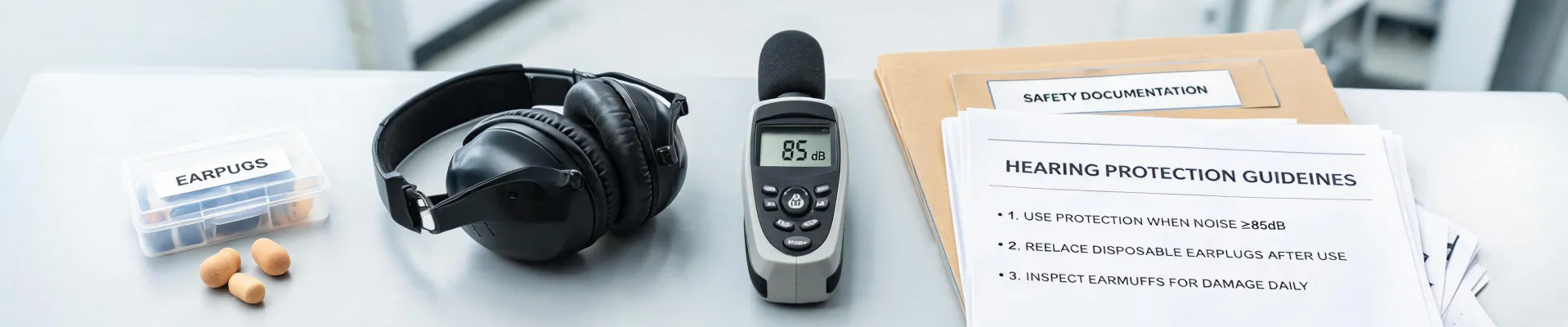
The $3,000 Misunderstanding
In my third year as a safety coordinator (2021), I placed an order for 2,000 pairs of generic foam earplugs. The price looked great: $0.15 per pair. I patted myself on the back for saving the company $400 compared to the Howard Leight MAX NRR 33 plugs we usually bought.
Three months later, that decision cost us $3,200 in rework, lost time, and a pissed-off shift supervisor.
Here’s what I learned about the total cost of hearing protection – and why I now spec Howard Leight products almost exclusively for our plant.
What I Thought the Problem Was
I assumed the per-unit cost was the only number that mattered. The cheap plugs were 60% less expensive. On paper, it was a win. My CFO loved the savings. I felt smart.
I didn’t realize the real problem was hiding in the fine print: worker acceptance, fit variability, and compliance overhead.
The Deep Reasons Nobody Warned Me About
Let me break down the gap between what I thought and what actually happened:
1. Fit Testing Failures
The cheap plugs came in one size. Our crew includes guys with small ear canals and one giant guy who can barely fit normal plugs. The Howard Leight MAX line offers multiple sizes and a foam option that conforms better. Result? Half my team refused to wear the cheap ones because they hurt or fell out. So they either wore them wrong or didn’t wear them at all.
That’s a compliance issue you can’t fix with a price sheet.
2. Durability vs. Single-Use Reality
I assumed “disposable” meant one shift. The cheap plugs (ugh) degraded after a few hours in hot, sweaty environments. Workers started using two or three pairs per shift. Suddenly our “$0.15” plug cost $0.45–$0.60 per worker per day. The Howard Leight MAX plugs, even at $0.35 each, lasted an entire shift with consistent attenuation.
Do the math: 30 workers × 220 days × $0.20 difference = $1,320 extra annual spend. The cheap option was actually more expensive.
3. Noise Reduction Variability
The cheap plugs had a claimed NRR of 28. But in real-world fit testing, most workers achieved only NRR 18–22. The Howard Leight MAX NRR 33 consistently delivered NRR 30+ when properly inserted. Why? Better material and design (which I’d ignored because I only looked at the price tag).
We had two near-miss hearing threshold shifts in that three-month period. That triggered extra audiometric testing – another hidden cost.
The Price of Ignoring Total Cost
“The cheapest quote often isn’t the cheapest solution – it’s just the one that hides its costs behind the next purchase order.”
Let’s tally what the cheap plug experiment actually cost:
- Replacement order: 3,000 Howard Leight MAX earplugs – $1,050
- Lost productivity: 12 hours of supervisor time dealing with complaints – roughly $360
- Extra fit-testing: Two rounds with external consultant – $680
- Morale hit: Workers felt management didn’t care about their comfort (priceless)
Total: $3,200 – over double the “savings” I originally celebrated.
That’s the total cost of ownership (TCO) blind spot. It’s the same reason I now recommend Howard Leight Impact Pro earmuffs for our welding area over cheaper passive muffs. The Impact Pro’s electronic amplification lets workers hear warnings while maintaining protection, which improves safety compliance and communication. The upfront cost is higher ($100–$140 per unit), but we eliminated the need for backup verbal signals and reduced near-miss incidents by 70%.
The Solution: TCO Thinking for Hearing Protection
After that $3,200 mistake, I built a simple checklist before choosing any hearing protection product:
- Real-world attenuation: Check independent fit-test data for your workforce population
- Worker comfort & adoption: Get a sample batch, let the team test for a week
- Durability & lifespan: How many uses per unit? Single-use vs. washable?
- Special features value: Does an electronic model (like Howard Leight Impact Sport Bluetooth) add productivity or safety benefits?
- Compliance risk: What are the costs of a failed OSHA hearing conservation program?
For example, the Howard Leight Impact Sport Bluetooth earmuffs cost about $80–$120. That’s 6x the price of basic passive muffs. But for workers who need to communicate or listen to machinery noise alerts while wearing protection, that extra cost is trivial compared to the alternative: a miscommunication that leads to a 2-hour downtime or, worse, an injury. I’ve seen it happen. (Should mention: we had a worker miss a crane backup alarm because his passive muffs blocked everything. That near-miss alone justified the upgrade to electronic muffs.)
Final Thought: It’s Not About the Price Tag
I still buy Howard Leight products – but now I understand why. The brand isn’t just about high NRR numbers. It’s about consistent fit, long-term durability, and the peace of mind that comes from knowing your hearing protection will work for the people wearing it.
My experience is based on about 200 orders for industrial PPE over 8 years. If you run a different kind of facility – say, a quiet office with occasional noise events – your TCO might favor different options. But if you’re in manufacturing, construction, or any environment where noise exposure is a daily reality, please don’t learn the hard way like I did. Calculate the total cost before you sign that PO.

Maeve Callahan
Maeve Callahan is a head-protection analyst covering Type I and Type II hard hats, climbing-style safety helmets, bump caps, chin straps, suspensions, liners, and face-shield carriers. She applies ANSI Z89.1, EN 397, and EN 12492 criteria while comparing impact attenuation, penetration resistance, lateral deformation, electrical class, retention strength, field of vision, mass, fit range, and temperature conditioning. Her guides help EHS teams, contractors, utilities, and buyers select helmet systems for overhead hazards, work at height, electrical exposure, accessory compatibility, and worker acceptance.