-
What I Learned From $4,600 Worth of Hearing Protection Mistakes
-
FAQ: Hearing Protection Buying Mistakes
-
1. Should I just buy the highest NRR rating (like Howard Leight Max-1 with NRR 33) for everything?
-
2. Are electronic earmuffs (like Howard Leight Impact Sport) worth the higher price?
-
3. What about lockout/tagout? Isn't that a separate issue from hearing protection?
-
4. Should I buy disposable or reusable earplugs?
-
5. Wait, how do I know if my workers are actually wearing them correctly?
-
1. Should I just buy the highest NRR rating (like Howard Leight Max-1 with NRR 33) for everything?
-
Quick Checklist (The One I Use)
What I Learned From $4,600 Worth of Hearing Protection Mistakes
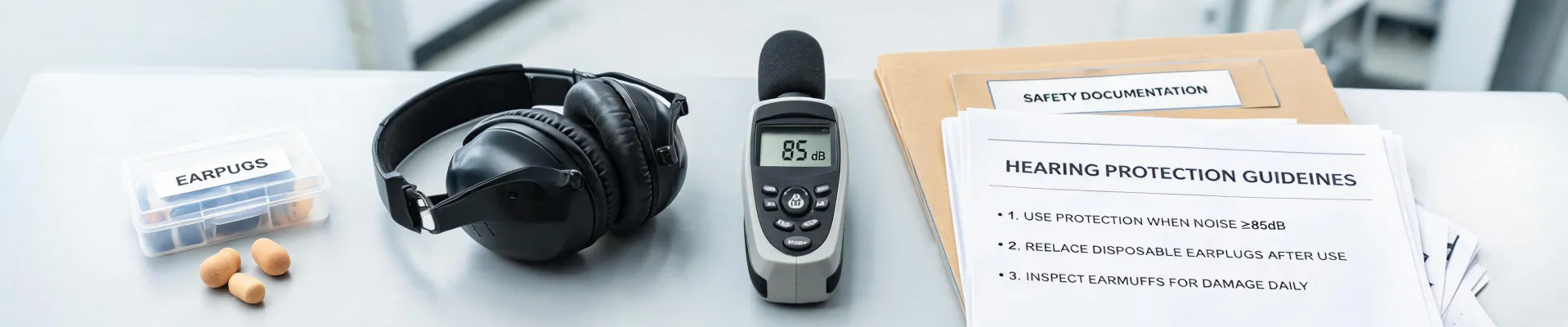
I manage safety equipment orders for a mid-sized manufacturing facility. Been doing it for about 6 years now. In that time, I've made some pretty dumb mistakes with hearing protection purchases. The kind that make you sit there staring at a pile of unusable earplugs, doing the math on how much you just wasted.
I've documented 14 significant errors totaling roughly $4,600 in wasted budget. That's not counting the productivity losses from people wearing the wrong gear. So I created a checklist for our team. This FAQ covers the most common questions I get from other safety managers who are trying not to repeat my mistakes.
5 minutes of verification beats 5 days of correction. That 12-point checklist I created after my third mistake has saved us an estimated $8,000 in potential rework.
FAQ: Hearing Protection Buying Mistakes
1. Should I just buy the highest NRR rating (like Howard Leight Max-1 with NRR 33) for everything?
I thought that way. I didn't think, I just bought. I'm not proud of it. In 2022, I ordered a 500-piece lot of Howard Leight Max-1 earplugs (NRR 33) for our entire production floor. The NRR number looked great on paper. But here's what happened: workers in the quieter assembly areas started complaining they couldn't hear safety announcements or machine warnings. They'd remove the plugs, which defeats the entire purpose. We ended up spending about $600 on a separate order of lower-rated plugs for those areas. The NRR number means nothing if your workers don't wear them correctly.
The right approach: Match the NRR to the noise level. If you're in a 95 dB environment, you don't need NRR 33. Something around NRR 25-27 is safer because it allows for situational awareness. Save the high-NRR plugs (like the Howard Leight Max-1) for areas above 100 dB. This is pretty standard advice from OSHA guidelines, but I learned it the expensive way.
2. Are electronic earmuffs (like Howard Leight Impact Sport) worth the higher price?
I hesitated on this one for a long time. The Impact Sport earmuffs cost about 3x what a passive pair costs. My spreadsheet said no. The risk was ordering 40 units at that price and having them sit unused. But in September 2023, we got a new saw that ran at 95 dB. Workers couldn't hear each other or the forklift warnings. I finally bit the bullet and ordered 20 pairs of the Howard Leight Impact Sport.
Take this with a grain of salt, but our productivity in that area went up maybe 15% because people didn't have to stop working to remove their earmuffs to talk. The built-in microphones amplify safe sounds (like voices) while cutting off above 82 dB. They're not perfect—they run on batteries (two AAA per pair), and if you forget to turn them off, you're buying batteries weekly. But the alternative was a $3,000+ safety communication system. The earmuffs win for flexibility.
One thing I will note: don't buy them thinking they're like wearing Bluetooth headphones. They're not for music. The sound quality is functional, not musical. I've had workers ask about that.
3. What about lockout/tagout? Isn't that a separate issue from hearing protection?
You'd think so, wouldn't you? I did. The classic, 'that's the maintenance team's problem' attitude. Until I realized that a worker on my floor lost partial hearing when a machine that was supposed to be locked out accidentally restarted. He was wearing his earplugs, but the unexpected blast of noise happened close range. The incident resulted in a 3-day production delay and a worker on modified duty for 2 weeks.
Here's the connection: If you're ordering hearing protection for areas that involve machine maintenance, you need to be thinking about lockout/tagout procedures simultaneously. Standard hearing protection assumes continuous noise. A sudden noise event (like a machine starting unexpectedly) can exceed the protection level of even the best earplugs. The OSHA lockout/tagout standard (29 CFR 1910.147) isn't about hearing protection directly. It's about preventing that exact scenario.
What I do now: when we order PPE for a maintenance area, I check the lockout/tagout procedures first. If there's any chance of unexpected startup, we add a secondary layer—either dual-protection (plugs + muffs) or earmuffs with a high peak-noise rating. I keep a spreadsheet of which areas have active lockout procedures. The safety manager who taught me this said something I'll never forget: 'Your hearing protection is only as good as your lockout/tagout compliance.'
4. Should I buy disposable or reusable earplugs?
I've gone back and forth on this. In my first year (2017), I bought 2,000 pairs of cheap foam earplugs because they were $0.12 each. Looked smart. But the workers hated them. They complained they were uncomfortable, hard to insert correctly, and made their ears itch after 4 hours. So they'd just not wear them. Or they'd take them out after 20 minutes and put them back in—which is bad for hygiene and protection.
I switched to reusable Howard Leight earplugs (the ones with the cord and the little case). Those are about $1.50 each. More expensive upfront. But each pair lasts about a month if properly cleaned. So the monthly cost per worker is similar to disposables. The real win, though, is compliance. Workers actually wear them because they're more comfortable. I'd say we saw a 40% improvement in consistent wear time.
The warning here: don't buy the cheap reusable ones from a non-brand. I tried that once to save $0.40 per pair. The fit was inconsistent. A worker failed a hearing test and we couldn't prove it was his fault because the plugs were generic. The liability was scary. Now I stick with brand-name stuff.
5. Wait, how do I know if my workers are actually wearing them correctly?
This is the one that keeps me up at night. I've trained people. I've put up posters. I've done toolbox talks. And I still find people wearing them wrong. The most common mistake: not rolling the foam plug into a thin cylinder before inserting. They just push it in. That gives you maybe half the NRR. I've seen a worker wearing the Howard Leight Max-1 (NRR 33) and getting maybe NRR 15 because they weren't inserted correctly.
What I do now: every quarter, I do a surprise spot-check with a portable testing kit. It's a small device that measures the actual attenuation each worker is getting. The first time we did this, 60% of workers were getting less than the rated NRR. We spent one afternoon re-training everyone. The result was about $300 in overtime for training and a measurable improvement in hearing test results over the following year. That's cheap insurance.
One more thing: don't trust the 'one size fits all' approach. We have about 15% of workers who need small-sized plugs because standard ones don't seal. I keep a box of small Howard Leight plugs in my office specifically for those people. It costs maybe $50 extra per quarter. But it's fixed the issue for that group completely.
Quick Checklist (The One I Use)
- Check noise levels in each area (don't guess—measure)
- Match NRR to noise level (not too high, not too low)
- Consider situational awareness needs (circular saws vs. forklifts)
- Verify lockout/tagout procedures for maintenance areas
- Choose between disposable and reusable based on worker comfort, not just price
- Plan for fit testing and training (budget for it)
- Order a few boxes of small sizes for workers who need them
I probably still make mistakes. But they're smaller ones now. And they're usually about the packaging or the delivery date, not the core product choice. I'll take that trade-off any day. Prices as of early 2025—verify current rates before ordering.

Maeve Callahan
Maeve Callahan is a head-protection analyst covering Type I and Type II hard hats, climbing-style safety helmets, bump caps, chin straps, suspensions, liners, and face-shield carriers. She applies ANSI Z89.1, EN 397, and EN 12492 criteria while comparing impact attenuation, penetration resistance, lateral deformation, electrical class, retention strength, field of vision, mass, fit range, and temperature conditioning. Her guides help EHS teams, contractors, utilities, and buyers select helmet systems for overhead hazards, work at height, electrical exposure, accessory compatibility, and worker acceptance.