I keep a spreadsheet that tracks every safety supply order we've made since 2018. My team calls it the money nerd sheet. I call it my job. As the procurement manager at a 35-person facility maintenance company, I've managed a safety supplies budget of roughly $60,000 a year for seven years, negotiated with more than 40 vendors, and documented every order in our internal cost tracking system.
In Q3 2024, I ran a comparison that changed how I buy a few things: Howard Leight Max-1 earplugs vs Howard Leight Max Corded earplugs. Same foam. Same NRR 33. The only real difference is a cord. But by the time I tracked loss, reordering, and compliance, the two were not even close. Then I realized the same pattern was hiding in our disposable coveralls order and in the chain link fence gate we built last spring.
Howard Leight Max-1 vs Max Corded Earplugs: Same Plug, Different Math
The Howard Leight Max-1 earplugs are the classic orange foam earplugs. The Max Corded version is the same shape and same NRR 33, just with a cord and a plastic connector. If you're reading Howard Leight Max Corded earplugs reviews for comfort, the comfort parts sound almost identical. The cord doesn't change the fit much. It changes what the worker does with the plug when they take it out.
In 2023, I ordered 3,000 pairs of the uncorded Max-1 and thought the hearing protection budget was handled. Then a field supervisor sent me a photo of the floor mat of a service van. There were fourteen crushed earplugs in the rubber grooves. Not in a trash bag. Under the seat. That photo made me look at the difference between the price per pair and the cost per pair that actually gets worn.
Our October 2024 invoice had the uncorded Max-1 at about $0.11 per pair. The Max Corded plugs were around $0.19 per pair. On paper, that's 73% more expensive. But after we switched the field crew to corded plugs, our earplug order pair count dropped about 40% over the next two quarters. The net spend went up a few percent—not 73%—and the crew actually had plugs with them when they walked into a noisy area. Honestly, I hit 'approve' on the first corded order and wondered if I was overreacting to one floor mat photo. I didn't relax until the next two quarterly reports confirmed the pair count drop.
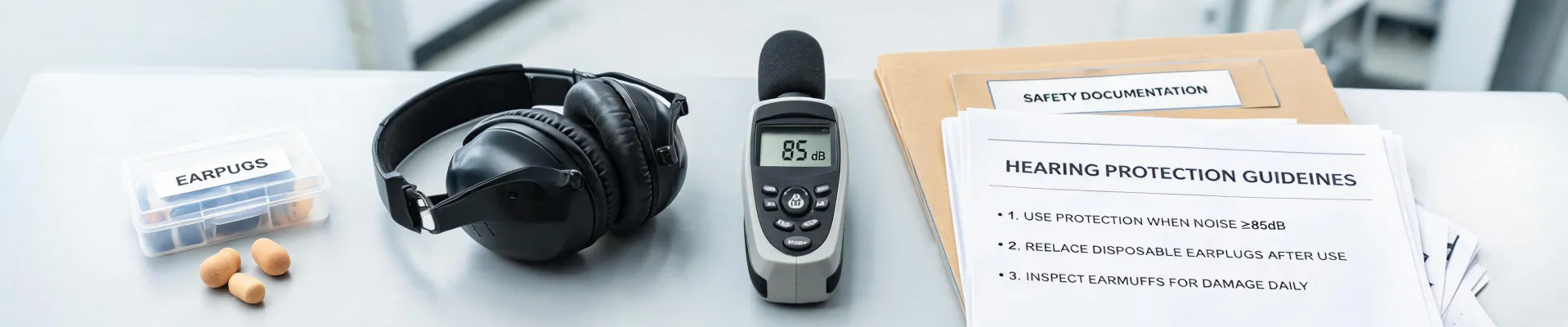
Under OSHA 29 CFR 1910.95, when noise exposure hits 85 dBA over an eight-hour TWA, we have to provide hearing protection and make sure it's used. Our last noise survey was October 2024. A lost plug isn't just lost inventory; it's a compliance gap. That's the cost I was missing.
If your crew works in one spot and takes a fresh plug from a dispenser every shift, the uncorded Max-1 is fine. If your crew moves around, does maintenance, and takes plugs in and out all day, the extra cost of the corded version is cheaper than the alternative.
Disposable Coveralls: The $1.30 Suit Was the Expensive One
I wish I could say the earplug lesson stuck. It didn't. In early 2023, I bought the cheapest disposable coveralls I could find. About $1.30 per suit. The unit price looked great. The cost per completed task did not.
The crew started tearing the cheap suits at the shoulders and knees within the first week. Then they started double-layering because one layer didn't feel protected. Double the suits, double the waste. We switched to a mid-range SMS disposable coverall for about $2.40 per suit. It didn't tear on normal use. The crew wore one suit per task instead of two. At the end of the quarter, the $2.40 suit cost us less per task than the $1.30 suit. Let me rephrase that: the cheaper suit was the expensive one, once the extras and the second suit were counted.
That doesn't mean buy the priciest coveralls in the catalog. It means buy coveralls that match the work. For our crew, the mid-range option was the sweet spot. The 'cheap' one was false economy.
A Chain Link Fence Gate: DIY Wasn't Cheaper
The most expensive cheap decision I made last year was a chain link fence gate. We needed to close a 12-foot opening in an equipment yard. I priced chain link fence panels and gate kits. The panels were straightforward. The gate was my mistake.
I watched a few 'how to build a fence gate' videos and convinced myself it was a weekend project. One video made it look easy: cut the frame, weld the corners, hang it, done. The video didn't show three trips to the hardware store, the angle grinder rental, or the moment when the latch didn't line up.
The materials came to $213. The labor was two workers for two weekends—roughly $760 in shop time and lost productivity—plus a gate that dragged on one side. After a month, I ordered a pre-hung galvanized gate frame for $412 and paid $60 delivery. Our welder had it operational in 40 minutes. I still have the crooked latch on my desk to keep me humble. (Note to self: DIY labor is not free.)
That's the same reasoning as the earplugs and coveralls. I compared the sticker price of the gate kit to the price of a pre-hung gate, but I ignored the cost of my team's time and the rework. A fence contractor who told me 'this doesn't sound like our specialty' earned the next job because he knew his boundary.
What I Changed in Our Procurement Process
After those three comparisons, I made three changes:
- Field crews now get Howard Leight Max Corded earplugs. Uncorded Max-1 earplugs stay in the fixed dispensers at the shop, where workers take one and use it immediately.
- Disposable coveralls are ordered in the mid-range SMS style for general tasks. The cheapest suits are only for short, low-risk jobs where tearing won't matter.
- For any fence gate or similar work, I get a quote for a pre-assembled option before approving DIY labor. The quote isn't always lower, but it forces me to see the real comparison.
Our procurement policy now requires three quotes for orders over $500. But the quotes are only the start. I also ask what happens after the product is handed over. Does it get lost? Does it tear? Does it require skill we don't have on staff? That's the part no quote shows.
Know the Boundary Between Price and Value
I'm not a safety engineer. I don't certify noise levels or weld gate frames. I'm a buyer who tracks why a product costs more than the invoice says. When I stay in my lane and ask vendors what they're good at and what they're not, I get better advice. The vendors who tell me 'this isn't our strength' are the ones I trust for the next order.
So if you're deciding between Howard Leight Max-1 earplugs and Max Corded earplugs, stop comparing price per pair. Compare the cost per pair that actually gets worn. Then apply the same test to disposable coveralls, chain link fence gates, and every other 'cheap' purchase. At least, that's been my experience with a 35-person crew and a spreadsheet that doesn't lie.

Maeve Callahan
Maeve Callahan is a head-protection analyst covering Type I and Type II hard hats, climbing-style safety helmets, bump caps, chin straps, suspensions, liners, and face-shield carriers. She applies ANSI Z89.1, EN 397, and EN 12492 criteria while comparing impact attenuation, penetration resistance, lateral deformation, electrical class, retention strength, field of vision, mass, fit range, and temperature conditioning. Her guides help EHS teams, contractors, utilities, and buyers select helmet systems for overhead hazards, work at height, electrical exposure, accessory compatibility, and worker acceptance.