-
Howard Leight MAX-1 Earplugs: NRR 33 Spec, Reviews, and Buying Lessons from the Trenches
-
1. What does the NRR 33 specification on Howard Leight MAX-1 earplugs actually mean?
-
2. What's the difference between MAX-1, MAX-30, and other Howard Leight foam earplugs?
-
3. Why did my workers reject the Howard Leight MAX-1 earplugs?
-
4. How do I know if my workers are actually getting the NRR 33 protection?
-
5. Can MAX-1 earplugs be reused, or are they single-use?
-
6. What's a realistic budget for Howard Leight MAX-1 earplugs in bulk?
-
7. What else should I add to my PPE order alongside hearing protection?
-
1. What does the NRR 33 specification on Howard Leight MAX-1 earplugs actually mean?
Howard Leight MAX-1 Earplugs: NRR 33 Spec, Reviews, and Buying Lessons from the Trenches
I've managed PPE procurement for a manufacturing plant for eight years. I've personally made—and documented—14 significant buying mistakes, totaling roughly $32,000 in wasted budget. Now I maintain our team's pre-order checklist so nobody repeats them. Hearing protection was a big chunk of that learning curve. Here are the questions I wish someone had answered before I placed my first Howard Leight order.
1. What does the NRR 33 specification on Howard Leight MAX-1 earplugs actually mean?
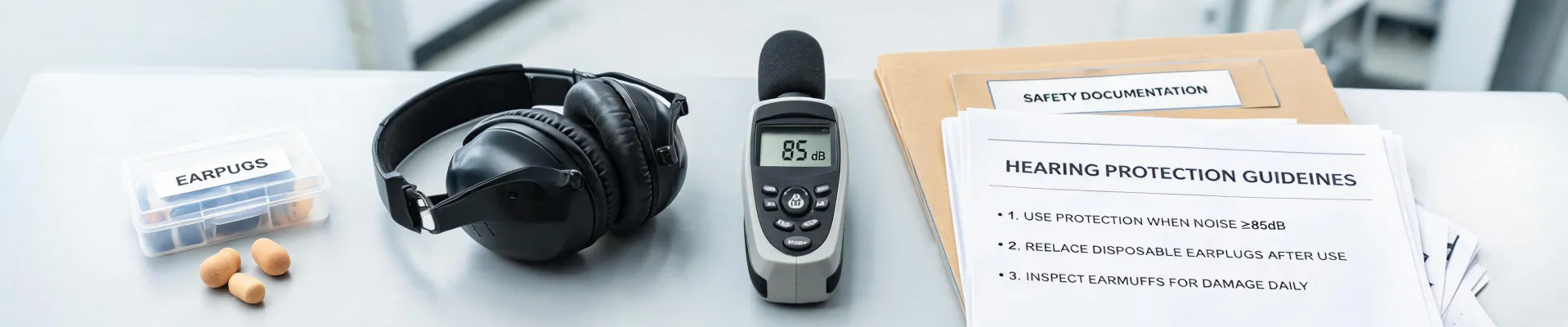
NRR stands for Noise Reduction Rating, and it's measured in a lab under ANSI S3.19-1974. The MAX-1's NRR 33 means that in ideal conditions, the plug reduces noise by 33 decibels. That's one of the highest ratings you'll find from any foam earplug on the market. Howard Leight—now part of Honeywell's PPE line—built its reputation on this kind of consistent performance.
But here's what took me years to understand: that number doesn't translate directly to the shop floor. The lab result comes from a trained test subject inserting the plug under near-perfect conditions—not from a worker on a 12-hour shift wearing gloves. NIOSH recommends derating foam earplugs by 50%, which puts the practical protection at around 16–17 dB. Still strong—but it changes your exposure math. OSHA's regulation (29 CFR 1910.95) sets the permissible exposure limit at 90 dBA over eight hours and requires a hearing conservation program at 85 dBA. If you're calculating based on the full 33 dB in the field, you're probably overestimating by a mile. I did, and it cost me a citation and a chunk of credibility.
According to OSHA (29 CFR 1910.95), the permissible exposure limit for occupational noise is 90 dBA over an 8-hour time-weighted average.
2. What's the difference between MAX-1, MAX-30, and other Howard Leight foam earplugs?
MAX-1 is the standard-size tapered foam earplug. MAX-30 is the large size. Both share the NRR 33 spec and the same slow-recovery polyurethane foam; the difference is the fit profile. There's also Laser Lite (NRR 32) for workers who need a smaller, lower-profile plug, and SparkPlugs if you want high-visibility colors for certain work areas—easier to spot during walk-throughs. Plus, you can get MAX-1s corded or uncorded. Corded versions are a no-brainer for people who take earplugs in and out all day.
That size difference sounds minor, but it's a deal-breaker for a subset of workers. When I compared our first batch of MAX-1s side by side with the complaints coming in, I finally understood why fit matters as much as the spec. About 15% of my team needed the larger MAX-30. If you read through Howard Leight MAX-1 foam earplugs reviews from other safety managers, you'll see the same pattern: the product works, but sizing and training are where it goes sideways.
3. Why did my workers reject the Howard Leight MAX-1 earplugs?
I assumed a high NRR meant no complaints. Wrong. When I dug into it, the reasons were: wrong sizing, poor insertion technique, and no easy access to fresh pairs.
The biggest one was insertion. Foam plugs have to be rolled into a thin, crease-free cylinder before going in—and nobody had ever shown my crew how to do it. Around 30% of the team was just pushing the unworn foam into their ears, which left gaps and dropped the protection to single digits. Basically wearing a seatbelt without buckling it.
That experience shifted my mindset. The product wasn't the problem; my training process was. We now spend ten minutes of every safety training session practicing insertion (yes, ten minutes—and it's worth it). After retraining, we measured the team's average attenuation again and found it improved by about 9 dB compared with what they were getting before. That's the difference between a compliant program and a serious violation.
4. How do I know if my workers are actually getting the NRR 33 protection?
Fit testing. Commercial systems measure real-world insertion loss for each ear. We use a simple fit-test kit that connects to a tablet and gives each worker a personal attenuation number in about two minutes. People actually enjoy it—it turns 'trust the label' into 'know your number.' You don't need to test everyone monthly, but spot checks are worth it.
A quick field method: have the worker insert the plug, then cup their hands over their ears and release. If the perceived noise barely changes, the seal is probably good. If it changes noticeably, something's off.
In my experience, the gap between a good and a bad insertion can be 15–20 dB—the difference between being safely below 85 dBA and sitting right at the edge. The NRR 33 spec of the MAX-1 is achievable, but only with consistent technique.
5. Can MAX-1 earplugs be reused, or are they single-use?
They're classified as single-use, and I'd treat them that way. Foam plugs collect dirt and earwax, and repeated compression degrades the slow-recovery foam that creates the seal. Once the foam gets stiff or dirty, attenuation drops.
I found out the hard way that some workers were keeping the same pair for a week—sharing them, even. That's a red flag for both hygiene and effectiveness. The fix was simple: wall-mounted dispensers in every high-noise area. When a fresh pair is within arm's reach, people replace them more often. It cut our earplug-related complaints roughly in half. The dispensers cost about $40 each—they paid for themselves within a month.
6. What's a realistic budget for Howard Leight MAX-1 earplugs in bulk?
As of early 2025, the quotes I've been seeing for uncorded MAX-1s run roughly $0.15 to $0.25 per pair when you order by the case, depending on distributor and volume. A 200-pair box usually lands in the $35–50 range; corded pairs run higher. Prices shift, so verify current quotes before you commit.
But don't zero in on price per pair alone. The numbers once told me I could save 35% by switching to a budget brand with the same NRR. My gut said workers would reject them. I went with the numbers. My gut was right—the cheap plugs were stiffer, tougher to roll, and expanded inconsistently. Half a case went to waste before the complaints started.
If you ask me, the per-pair difference is worth paying for consistency alone. A $50 difference per case translated to better compliance and fewer headaches. And when you put quality gear in front of your team, it sends a message that the company takes their safety seriously. That's a no-brainer.
7. What else should I add to my PPE order alongside hearing protection?
Since you're already paying for shipping, look at the whole list: hard hats, safety glasses, work gloves, and work boots. I usually bundle through one distributor to keep inventory simple. If your distributor doesn't carry a complete line, you'll end up juggling multiple shipments or holding incomplete inventory—I've done both. And if a distributor doesn't stock Howard Leight and other recognized brands, that's a red flag—walk away.
For work gloves, there's no universal best option. It depends on what your workers handle: coated gloves for oily parts, cut-resistant for metal work, leather for general use. Order a few styles on trial before committing to one.
And for work boots—honestly, where to buy matters less than the specs. Composite toe, slip-resistant soles, electrical hazard rating. I've seen companies buy the cheapest boots on the market, then end up with workers filing claims for slips and back pain. A $20 difference in boot price is nothing compared with a single lost-time injury. I use a dedicated safety footwear distributor because they handle sizing and returns much better. That lesson came from a $3,200 order where half the boots had to go back.

Maeve Callahan
Maeve Callahan is a head-protection analyst covering Type I and Type II hard hats, climbing-style safety helmets, bump caps, chin straps, suspensions, liners, and face-shield carriers. She applies ANSI Z89.1, EN 397, and EN 12492 criteria while comparing impact attenuation, penetration resistance, lateral deformation, electrical class, retention strength, field of vision, mass, fit range, and temperature conditioning. Her guides help EHS teams, contractors, utilities, and buyers select helmet systems for overhead hazards, work at height, electrical exposure, accessory compatibility, and worker acceptance.