The Wrong Question
Last month, a site manager handed me a pair of yellow foam earplugs in a clear plastic bag. No card, no NRR number, no brand name. “Same thing,” he said, “half the price.” I winced and asked where he had bought them. “Online. Free shipping too.”
That is the surface problem. Not the earplugs — the decision process that treats hearing protection like a generic commodity you can swap without consequences.
The question isn’t “should we switch to cheaper earplugs?” The question is “what are we really paying for when we buy cheap hearing protection?”
I have handled PPE orders for nine years. I have personally made—and documented—three significant buying mistakes that totaled roughly $9,500 in wasted budget. The one I am about to describe is the one that made me start keeping a checklist.
The Cheap Earplug Illusion
Let me be direct: I am not saying every budget earplug is dangerous. I am saying that when you choose by unit price, you often miss the cost that matters most—the cost of unmanaged hearing damage.
Hearing damage is slow, permanent, and invisible until it isn’t. It does not show up on a purchase order. It shows up in a hearing test five years later. By then, the $0.08 savings per pair has turned into a workers’ compensation claim, a regulatory inspection, and a very difficult conversation with someone who cannot hear their grandchild.
What I mean is this: the “cheapest” earplug is not only cheaper in price. It is cheaper because the manufacturer skipped the things you cannot see—density checking, expansion testing, and real acoustic attenuation verification. That is not a one-time hidden cost; it is a risk your workers carry every single shift.
The same logic applies to insulated coveralls for men. A low-end pair can look fine in a 50°F warehouse. After two washes, the insulation mats down, and workers start layering sweatshirts underneath. Either they stop wearing the coverall or they work less efficiently. The “savings” from the cheaper coverall disappears in one bad winter.
Why “All Foam Earplugs Are The Same” Is A Legacy Myth
The idea that all foam earplugs are basically the same comes from an era when hearing protection meant a box of cotton in the supply closet. That era is gone.
Today, a product like Howard Leight Max Foam Earplugs carries an NRR of 33—one of the highest attenuation ratings available. That rating isn’t a slogan. It is measured under controlled conditions, documented, and listed on the packaging under EPA’s noise labeling regulations (40 CFR Part 211). A no-name earplug with no NRR label isn’t “basically the same.” It is a product that has never proven it reduces noise by anything at all.
Why does this matter? Because NRR is not a decoration. It is the number your safety program relies on to decide whether a worker is adequately protected.
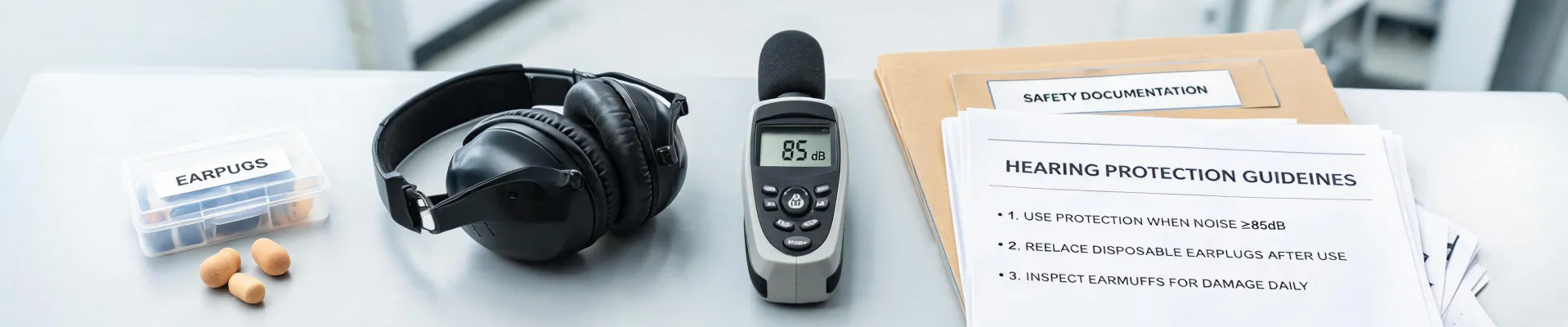
Per OSHA’s Hearing Conservation Amendment (29 CFR 1910.95), employers must provide effective hearing protectors when an employee’s 8-hour time-weighted average noise exposure reaches 85 dB or above.
Source: OSHA, 29 CFR 1910.95; EPA noise labeling regulations, 40 CFR Part 211
My $2,400 Lesson
In my first year responsible for PPE ordering, I made the classic mistake. I submitted a purchase order for 2,500 foam earplugs based on price per pair. The listing looked fine: “foam earplugs, NRR 33”. I compared the price to another supplier, approved it, and moved on.
The boxes arrived with a bright generic label. No batch number, no test date, no brand. When the safety auditor asked for the product’s attenuation documentation, the vendor stopped returning my calls.
That order became $2,400 of unusable product. “Unusable” because we could not verify it did what the label claimed. The reorder—with proper Howard Leight Max Foam Earplugs from a licensed distributor—arrived three days later and cost 12% more. The total waste was $2,400 plus a compliance gap that made everyone uncomfortable.
It also happened under time pressure. I had two hours to approve before the quarter-end order release. Normally I would verify the distributor’s authorization and ask for test data, but there was no time. In hindsight, I should have pushed the deadline back. With the finance team waiting, I made the call with incomplete information.
The Total Cost, Priced Honestly
Let’s do a simple calculation. Say you save $0.10 per pair by switching from a verified NRR 33 earplug to an unverified one. Over 10,000 pairs a year, that is $1,000. It looks great in a procurement dashboard.
Now imagine one worker in a noisy production area experiences a noticeable shift in their hearing test. Direct costs—medical evaluation, testing, paperwork, and workers’ compensation—can easily pass the tens of thousands. I know of one claim in my file that crossed $47,000. It wasn’t one dramatic accident. It was years of inconsistent hearing protection, one cheap decision at a time.
That is the difference between price and value. A $0.10 saving per pair begins to look like a very small prize once you compare it to a claim that starts with $47,000.
Earplugs Are Maintenance Items, Not Commodities
Everyone knows how to change a smoke detector battery. There are dozens of guides with “how to change smoke detector battery” in the title. The step that trips people up is not the how; it’s remembering to check the battery date. A cheap battery left in the detector can fail exactly when you need it most.
Earplugs are the same. A high-performance foam earplug only performs if it is stored correctly, handled with clean hands, and used consistently. Old foam, a mold that does not expand fully, or a product without quality control are all silent failures.
Think about a fish tank filter cartridge for a second. You can save two or three dollars on a generic cartridge, then watch the tank cloud up in three weeks. The filter was “fine” until it wasn’t. Earplugs are worse: the failure isn’t a cloudy aquarium; it’s a ringing sound at night that never stops.
A Better Ordering Checklist
Here’s the good news: you don’t need a bigger safety budget. You need a better ordering process. Since I started using this checklist, we have flagged 17 questionable orders before payment.
- Specify the product by name. Write “Howard Leight Max Foam Earplugs, NRR 33” or an equivalent approved product. Do not write “foam earplugs.”
- Buy from an authorized distributor. If the price looks too good, verify the vendor’s authorization. A 30-second phone call can save you $2,400.
- Demand the documentation. Ask for the product’s attenuation data and label before you issue the PO. A legitimate product comes with paperwork; a questionable one comes with excuses.
- Calculate total cost, not unit cost. Include your time, compliance risk, and the cost of redoing an order. If you ask me, the lowest quote wins the spreadsheet—and loses the case.
Look, I’m not saying a verified earplug is always the only correct option. But in my experience, when a hearing protection program fails, it isn’t because someone picked “the expensive brand.” It’s because someone picked the cheapest thing that looked like an earplug.
The best hearing protection is the one that is worn. The second best is the one you can defend in a safety audit. Howard Leight Max Foam Earplugs have become our default because they meet both tests. Not because they’re fancy—because they’re reliable.

Maeve Callahan
Maeve Callahan is a head-protection analyst covering Type I and Type II hard hats, climbing-style safety helmets, bump caps, chin straps, suspensions, liners, and face-shield carriers. She applies ANSI Z89.1, EN 397, and EN 12492 criteria while comparing impact attenuation, penetration resistance, lateral deformation, electrical class, retention strength, field of vision, mass, fit range, and temperature conditioning. Her guides help EHS teams, contractors, utilities, and buyers select helmet systems for overhead hazards, work at height, electrical exposure, accessory compatibility, and worker acceptance.