-
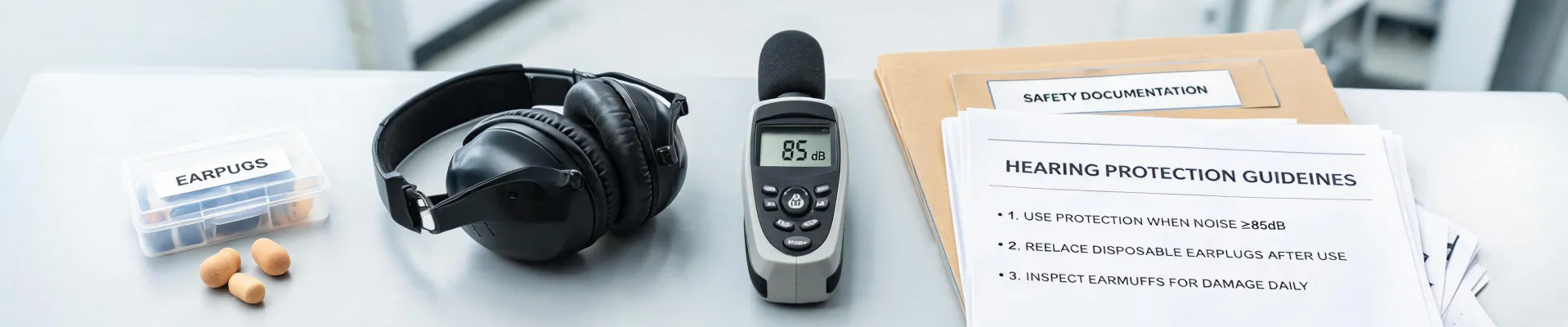
Are Howard Leight Max earplugs worth it for a whole facility?
-
What should I look for in the Howard Leight Max NRR 33 datasheet?
-
Does Howard Leight by Honeywell EN 352 certification matter?
-
Fire extinguisher cabinets: should we buy the cheapest one?
-
Railing: what's worth paying for?
-
Coveralls vs overalls: which one should we actually buy?
-
The question I didn't expect to ask: do you need corded or uncorded earplugs?
I've been managing PPE procurement for about six years now. Our spend runs roughly $120k a year across safety supplies, and hearing protection takes up a bigger chunk than you'd guess. Over that time I've fielded a lot of questions from our safety team and from other buyers who see our cost breakdowns. So here are the ones that come up most often, answered straight.
Are Howard Leight Max earplugs worth it for a whole facility?
Short answer: yes, but only if you're actually using them.
We switched to Howard Leight Max earplugs as our standard foam plug about three years ago. The NRR 33 rating is the highest you'll find in a disposable foam plug, and at around $0.10–0.20 per pair when bought in bulk, the unit cost is hard to beat. But I've seen companies stock them and then realize their workers don't like the feel, so they end up buying a second type anyway. That's when the "cheap" option gets expensive.
A few things to check before standardizing:
- Are workers already comfortable with foam plugs?
- Do you need corded vs uncorded? Corded costs a bit more and removes a choking hazard in some environments.
- Do you have a dispensing system? Loose bulk boxes lead to waste; wall-mounted dispensers reduce it.
If the answer to the first one is "not really," you're better off running a trial with a few options first. We didn't, and I had to reorder after a complaint from the shop floor.
What should I look for in the Howard Leight Max NRR 33 datasheet?
The datasheet seems straightforward, but for procurement, there are three numbers that matter:
- NRR 33 – the Noise Reduction Rating, tested in a lab.
- Attenuation values at specific frequencies – the average is 33, but it varies. The 125 Hz attenuation is around 22 dB, and it climbs to over 40 dB at higher frequencies. That matters if you're in a low-frequency noise environment.
- CSA Class Al – if you're buying for Canadian sites, this is the equivalent certification.
What I didn't realize early on is that the datasheet also has a roll-down time recommendation. It's not just a suggestion. The plug needs to be compressed and inserted correctly to hit the rated attenuation. If workers are just shoving them in unsquished, your real-world protection could be way below 33. That's a training cost, not a product cost.
Does Howard Leight by Honeywell EN 352 certification matter?
If you're buying in the European market or your company operates internationally, yes. EN 352 is the European standard for hearing protectors, and Howard Leight products by Honeywell are certified to it. The EN 352 standard has different testing and marking requirements than the US NRR system.
For a cost-conscious buyer, the practical issue is this: if you're buying for a European facility, the product needs the CE mark and EN 352 rating. If you're buying for a US site, NRR is what OSHA recognizes. Don't assume they're interchangeable. We had a supplier offer us a great deal on earplugs that were EN 352 certified but didn't have an NRR rating. That would have been a compliance issue for us. Always verify which standard your site requires before placing the order.
Fire extinguisher cabinets: should we buy the cheapest one?
This is one where I've seen procurement teams make the same mistake I almost made. We needed a bunch of fire extinguisher cabinets for a warehouse project, and the price range was wide: $40–$100+ depending on size, material, and mounting type. The cheapest models were plastic or thin steel with a door that latches with a simple catch.
What I've learned is that a few hidden costs matter more than the sticker price:
- Environmental rating: A cheap indoor cabinet isn't rated for outdoor use. If it's mounted outside, UV and moisture will degrade it. We paid more upfront for a fiberglass cabinet for exterior walls and saved a replacement cycle.
- Compliance: Depending on your local fire code, the cabinet may need to be marked, have a break-glass or a latch that's accessible in an emergency. Some cheap models don't meet the fire code requirement, especially for a commercial occupancy.
- Mounting hardware: Cheaper cabinets sometimes come with weak mounting brackets, which is a risk if a worker accidentally yanks the cabinet while grabbing an extinguisher.
In our case, we went with mid-range steel cabinets with a lockable latch for most locations, and a fiberglass one for the exterior. Total cost difference was about $35 per cabinet. That's a no-brainer compared to the cost of replacing a rusted-out unit or failing an inspection.
Railing: what's worth paying for?
Railing is another category where the cheap option can become the expensive one. If you're buying guardrail for a mezzanine or roof edge, the upfront cost matters, but the real total cost is in installation and maintenance.
I specified a painted steel railing once because it was cheaper than galvanized. The paint chipped within a year in a coastal environment, and we had to repaint it or watch it rust. If I'd done the math on the repainting cost, galvanized would have been cheaper from day one.
For industrial railings, also consider:
- Does the system have a tested load rating? Some cheaper railings don't have the documentation to show they meet OSHA 1910.29 standards.
- Are the connections self-leveling or adaptable to uneven floors? Some designs require shimming and custom cutting, which adds labor.
- Is the finish corrosion-resistant for your environment? Powder coating is fine indoors, but hot-dip galvanizing is better where there's moisture or chemicals.
Our procurement rule now is: if a railing is going to be installed in a location where a fall could cause serious injury, we only look at systems with published load-test documentation. That eliminates the cheapest options, but it also eliminates the liability.
Coveralls vs overalls: which one should we actually buy?
This one trips people up because the terms are used interchangeably, but in the PPE world, they're different.
- Coveralls are a one-piece garment covering the torso, arms, and legs. They are meant to protect your clothing from dirt, dust, or chemicals. Think Tyvek suits or fire-retardant coveralls.
- Overalls (in the US, sometimes called bib overalls) are typically a one-piece garment with a bib front and straps over the shoulders, leaving the arms exposed. They're more common in agricultural or maintenance work and focus on protecting pants and the lower body.
From a cost perspective, coveralls tend to cost more because they use more material and offer more protection. But if your workers don't need arm coverage, buying coveralls is wasted money. We had a crew doing sanding and grinding tasks where the concern was mostly paint overspray on pants and boots. We switched them to overalls and saved about 30% on that line item. On the other hand, when we needed chemical splash protection, overalls weren't even an option.
So the first question is not "which is cheaper?" but "what body parts are exposed to the hazard?" Then decide.
The question I didn't expect to ask: do you need corded or uncorded earplugs?
This is the one I wish I'd thought about earlier. Corded earplugs cost more, but in certain jobs, they prevent earplugs from falling into food, machinery, or contaminants. If a worker is reaching over a conveyor or working over a food-processing line, an uncorded plug dropped can cause a product contamination issue. That subtle cost has a bigger impact than the 2 cents per pair difference in many industries.
It seems like a tiny detail, but it's exactly the kind of thing that ends up in a supplier negotiation. We standardized on corded for half our facility and uncorded for the rest, and that single decision prevented a lot of waste. Sometimes the cheapest option isn't really the cheapest, once you factor in what happens when it fails.

Maeve Callahan
Maeve Callahan is a head-protection analyst covering Type I and Type II hard hats, climbing-style safety helmets, bump caps, chin straps, suspensions, liners, and face-shield carriers. She applies ANSI Z89.1, EN 397, and EN 12492 criteria while comparing impact attenuation, penetration resistance, lateral deformation, electrical class, retention strength, field of vision, mass, fit range, and temperature conditioning. Her guides help EHS teams, contractors, utilities, and buyers select helmet systems for overhead hazards, work at height, electrical exposure, accessory compatibility, and worker acceptance.