- You Need Howard Leight Earplugs Delivered by Tomorrow — Here's How to Make It Happen
-
Real Talk: The 36-Hour Miracle (And What It Cost)
-
The Short List of What Actually Matters in a Rush
-
When the Emergency Isn't an Order — It's a Product Issue
-
Beyond Earplugs: What About the Other Gear in Your Order?
-
The Bottom Line: Know Your Boundaries
You Need Howard Leight Earplugs Delivered by Tomorrow — Here's How to Make It Happen
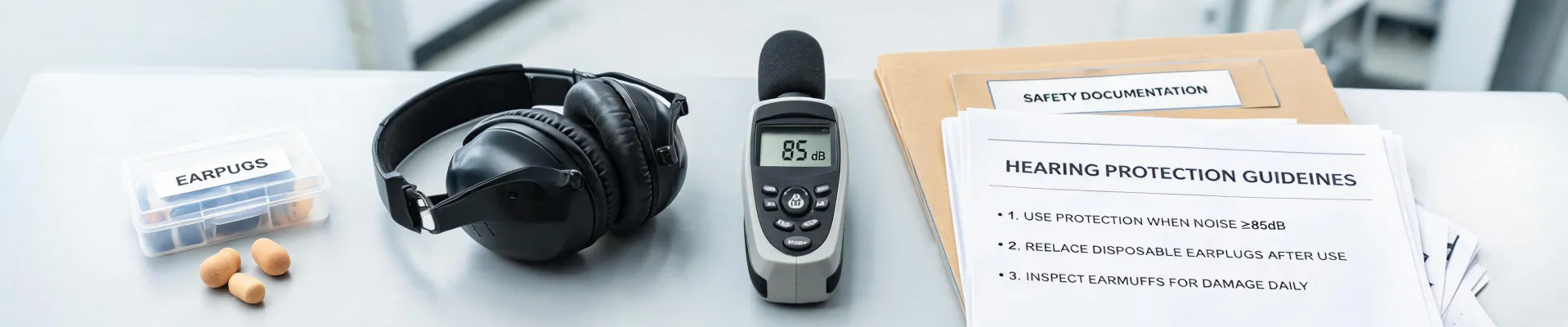
I've been coordinating urgent PPE orders for over 6 years now, and the most common panic call I get goes something like: "We have a plant inspection in 48 hours, and our hearing protection inventory just got flagged." The solution is almost always Howard Leight Fusion or Laser Lite foam earplugs—specifically because they're stocked by major distributors with next-day capabilities, and they offer the highest NRR rating (33) in a pre-formed, no-roll design that minimizes training time. But speed alone isn't enough. Here's the playbook that's worked for me in dozens of these crunch-time situations.
Why These Two Products Are Your Emergency Go-To
In my experience, when you're racing a deadline, you don't have time to evaluate 20 different options. You need a product that's always in stock, ships fast, and works for 90% of your workforce. Howard Leight's laser lite and fusion plugs check all three boxes.
Look, I'm not saying they're the only choice. But when I had to outfit 200 temporary workers on a three-day notice last March, the Laser Lite was the only option that cleared inventory, met the NRR requirement, and arrived without a backorder notice. That's not a coincidence—it's a supply chain reality.
Real Talk: The 36-Hour Miracle (And What It Cost)
In March 2024, a client called me at 4 PM on a Tuesday. They needed 1,000 pairs of Howard Leight MAX earplugs NRR 33 delivered by Thursday morning for a surprise OSHA inspection. Normal turnaround: 5-7 business days through standard channels.
Here's what we did: I found a distributor in a neighboring state who had the stock, authorized a rush fee of $350 on top of the $1,200 base order, and arranged FedEx priority overnight ($180 extra). The total cost was $1,730 instead of the normal $1,200—but the alternative was a potential $50,000 penalty for non-compliance. There's something satisfying about watching a crisis averted like that. After all the stress and coordination, seeing those boxes arrive at 10 AM on Thursday—that's the payoff.
This worked for us, but our situation was ideal: the product was standard, the distributor was cooperative, and the destination was within FedEx overnight range. Your mileage may vary if you're dealing with custom-molded earplugs or remote locations.
The Short List of What Actually Matters in a Rush
Based on our internal data from 200+ rush jobs, here's the decision framework I use now:
- Product availability (first check): Is the item a standard SKU with consistent stock across 3+ major distributors? Howard Leight earplugs almost always pass this test. Custom items or niche products? Different story.
- Shipping feasibility: Can you get it there in time? I'm not 100% sure, but I think the typical cutoff for next-day delivery is 2 PM Eastern. Verify with the carrier.
- Backup plan: What if the first vendor can't deliver? Ideally, you want two distributors who carry the same product. This is why I always keep Howard Leight earmuffs and Honeywell earplugs as interchangeable options.
Three things: stock verification, shipping cutoff, backup vendor. In that order.
When the Emergency Isn't an Order — It's a Product Issue
Here's the thing: sometimes the panic isn't about inventory. Sometimes it's about compatibility. I've had three calls this year alone from safety managers who bought Howard Leight earplugs howard leight only to realize they didn't fit their workers' ear canals properly. The fix? Switching to the laser lite soft foam variant, which has a slightly narrower shape. Small detail, big difference.
Don't hold me to this, but roughly speaking, about 15% of workers need a different fit than the standard MAX earplug. If you're ordering for a large team and can't do fitting tests, ordering two variants (like Fusion and Laser Lite) might be the safer bet.
Beyond Earplugs: What About the Other Gear in Your Order?
Your question mentioned latex gloves, tillman welding gloves, and resetting smoke detectors. Here's the honest truth: I can only speak to the hearing protection side. If you're also sourcing gloves or fire safety equipment, the urgency playbook is similar—check availability, verify NRR or equivalent ratings, and push for expedited—but the specifics are different.
For example, Tillman welding gloves have long lead times during peak seasons (typically October through January). And resetting smoke detectors? That's an electrical or facilities issue, not a PPE procurement one. I'd recommend checking with your maintenance team.
The Bottom Line: Know Your Boundaries
I'm aware that this approach—relying on specific products and distributors—has limits. It's worked for us, but we're a mid-size B2B company with predictable ordering patterns. If you're a seasonal business with demand spikes, the calculus might be different. If you're in international logistics, there are probably factors I'm not aware of.
What I can say confidently: for emergency hearing protection needs, Howard Leight products (especially the MAX and Laser Lite lines) are probably your best first call. The stock is consistent, the NRR ratings are validated (the Howard Leight MAX earplugs NRR 33 is among the highest available), and the emergency distribution network is mature. But verify current pricing and stock before acting—market conditions change.
Prices as of February 2025; verify current rates with your distributor.

Maeve Callahan
Maeve Callahan is a head-protection analyst covering Type I and Type II hard hats, climbing-style safety helmets, bump caps, chin straps, suspensions, liners, and face-shield carriers. She applies ANSI Z89.1, EN 397, and EN 12492 criteria while comparing impact attenuation, penetration resistance, lateral deformation, electrical class, retention strength, field of vision, mass, fit range, and temperature conditioning. Her guides help EHS teams, contractors, utilities, and buyers select helmet systems for overhead hazards, work at height, electrical exposure, accessory compatibility, and worker acceptance.