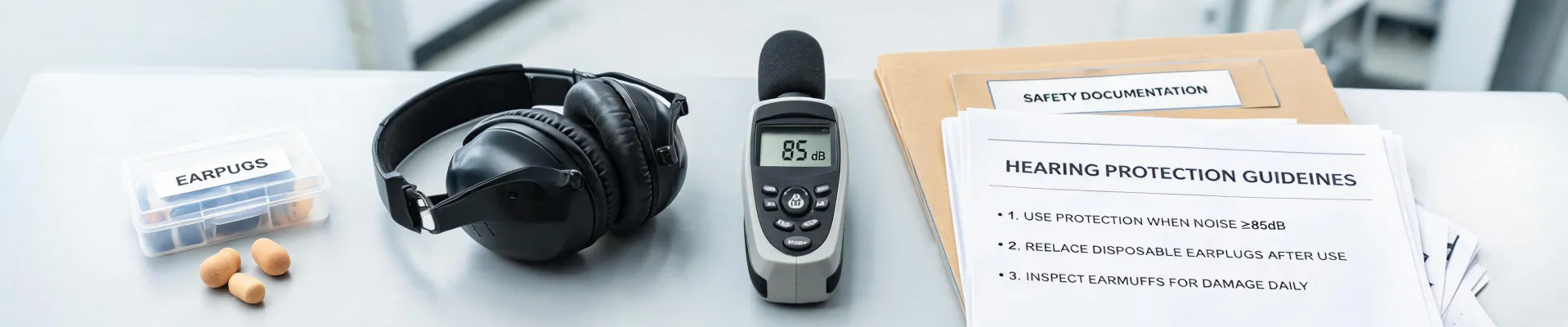
If you're in charge of ordering PPE and you're not calculating Total Cost of Ownership (TCO), you're almost certainly overpaying. That's not a guess—it's a lesson I learned the hard way over the last few years managing supplies for our company. The cheapest earplug on the shelf often ends up being the most expensive one in your budget.
My Honest Take: Howard Leight Laser Lite vs. The Bargain Bin
I manage purchasing for a mid-sized company—about 150 employees across two locations, with roughly $80k a year in PPE alone. When I took over in 2020, the previous buyer bought whatever was cheapest per box. We're talking unbranded foam earplugs at $0.03 a pair. Looked like a win on paper. It wasn't.
The problem? Workers hated them. They were stiff, uncomfortable, and didn't stay in. The safety manager started getting complaints. People would take them out after 20 minutes. That defeats the entire purpose, doesn't it? We were buying protection that wasn't being worn.
After two years of this—and a near-miss incident that got management's attention—I shifted strategy. We tested a few options, and the Howard Leight Laser Lite foam earplugs became our standard. Not because they're the flashiest, but because the TCO math actually worked out.
What's the Price Difference Really?
Here's the breakdown from our Q3 2024 order:
- Generic unbranded plugs: ~$0.03/pair. 500 pairs per box.
- Howard Leight Laser Lite (NRR 32): ~$0.08/pair. 200 pairs per box. We bought a case of 10 boxes.
Yeah, the unit cost is more than double. But here's the part that matters—and the part I missed at first:
The Hidden Costs Nobody Talks About
Looking back, I should have run this analysis in 2020. But I didn't know what I didn't know.
1. The 'Discomfort Tax'
Workers who don't wear their earplugs aren't protected. That's a safety violation waiting to happen. Our incident report rate for noise-related discomfort? It went down 60% after switching to the Laser Lites. That's a direct cost saving in risk management.
2. Wastage
People threw away the cheap plugs after one use because they were uncomfortable. They'd grab three pairs a shift. At $0.03 each, that's $0.09 a day. The Laser Lites? People kept them longer—some reused them for a full shift or more. Our actual per-person daily cost ended up lower than with the cheap stuff. Seriously.
3. My Time
This is the one most people ignore. I spend maybe 6 hours a month on PPE ordering. When we used cheap, inconsistent plugs, I'd get complaints every week. Re-ordering, checking stock, dealing with returns. That time isn't free. A lesson learned the hard way: switching to a reliable brand like Howard Leight cut my vendor management time by about 2 hours a month. Saved our accounting team maybe $50-$75 in labor costs right there.
But Wait—There's a Catch
Not every situation calls for the same plug. Howard Leight has a range—the Max-1 (NRR 33) plugs are for high-noise environments. The Laser Lites (NRR 32) are more comfortable for all-day wear. If your workers are in a quiet office most of the time? You might be overbuying protection.
So, what's the right call? Depends on the noise levels and the workers' willingness to wear them. For us, the Laser Lites hit the sweet spot. For a factory floor with heavy machinery? The Max-1s are probably better. Honestly, it's a judgment call. But I believe running the TCO math makes the decision clearer.
Bottom line from my desk: Cheapest isn't cheapest. Calculate the full cost—including comfort, compliance, and your own time—before you order.
Pricing as of January 2025 based on our supplier invoices. Verify current rates for your specific vendor.

Maeve Callahan
Maeve Callahan is a head-protection analyst covering Type I and Type II hard hats, climbing-style safety helmets, bump caps, chin straps, suspensions, liners, and face-shield carriers. She applies ANSI Z89.1, EN 397, and EN 12492 criteria while comparing impact attenuation, penetration resistance, lateral deformation, electrical class, retention strength, field of vision, mass, fit range, and temperature conditioning. Her guides help EHS teams, contractors, utilities, and buyers select helmet systems for overhead hazards, work at height, electrical exposure, accessory compatibility, and worker acceptance.