It Started Like Any Other Wednesday... Then the Phone Rang
Last quarter, around 3 PM on a Wednesday, I got a call that would change how our team handles PPE procurement. The kind of call that starts with “We’ve got a problem” and ends with a ticking clock. A client—a large construction firm—had just failed an unannounced OSHA-style audit. They needed a full lineup of compliant personal protective equipment. Not next week. Not tomorrow. By Friday morning. It was Wednesday afternoon.
The list was a beast: Howard Leight MAX earplugs (NRR 33, the highest you can get without electronics), Type 2 hard hats, safety glasses with side shields, a few full-body harnesses for their fall protection program, and half a dozen field fence rolls for perimeter marking. Oh, and they wanted three first aid kits stocked to ANSI Class A standards. Normal lead time for that mixed order is about six business days. They gave us thirty-six hours.
I've handled 200+ rush orders in my career, so the initial panic has long since faded. But this one? This one had a specific pressure. The client's penalty for not having compliant PPE on-site was a $15,000-per-day fine from their general contractor. And they were already behind schedule.
The First Trap: Grabbing the Cheapest 'Available' Option
When you're in this kind of fire drill, your brain wants to move fast. You look at the spec sheet, you check stock, and your eye naturally goes to the lowest price item that's in stock. It's a survival instinct. For the fall protection harnesses, I found a vendor who could do a same-day pickup. They had a harness for $78—almost 40% cheaper than what we usually use. I almost clicked 'buy' right there.
But I've been down that road before (note to self: remember the lesson from 2022). I paused. The harness was cheap, but it wasn't ANSI Z359.11-2021 compliant. It was an older model. Sure, it would technically hold a worker, but it wouldn't pass the paperwork check. A safety manager on-site would catch that in five seconds. The wrong harness costs you the whole order, not just the $78.
I took a deep breath and called our primary distributor. They had the compliant model. It was $127 per unit. More expensive, but it came with a cert of compliance. I paid the rush fee—$200 extra—and we had them overnighted. A lot of buyers I've worked with would've balked at the price jump. But here's the thing: the $200 rush fee and the higher unit cost felt painful in the moment, but they were peanuts compared to what could've gone wrong.
The Real Crisis: Earmuffs vs. Earplugs
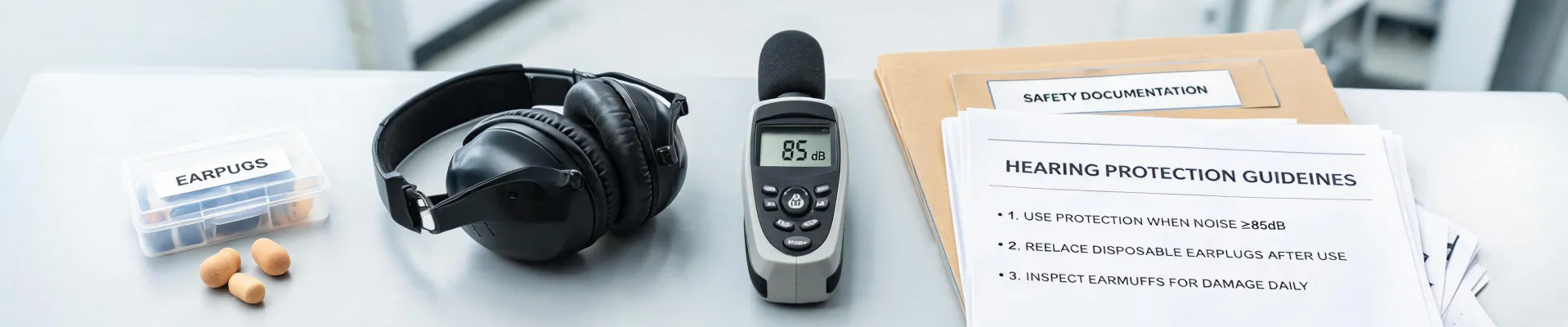
So we got the harnesses sorted. Earmuffs? Easy. Howard Leight has a killer range, and we always stock the Impact Sport series for general noise. The real headache was the earplugs. Our client needed NRR 33. The Howard Leight MAX earplugs are the standard here. But they're also the most commonly counterfeit item in the hearing protection world. I'm not kidding.
I found a 'deal' on a bulk case of MAX plugs—$200 less than our usual supplier. The seller had good reviews, but something felt off. I checked the lot number against Honeywell's database. It was bogus. The lot number didn't exist. Those plugs? They'd probably offer NRR 25 at best. That's a huge compliance gap. A worker wearing fake NRR 33 plugs in a 110 dB environment? They're not protected.
Most buyers focus on the front-end cost and completely miss the sourcing verification. It's the classic outsider blindspot. The question everyone asks is, 'How much are they?' The question they should ask is, 'Where did they come from and can you prove it?'
I paid the full price for the verified stock. It felt like a loss. But I've got a mental spreadsheet that runs in the background. Let's do the math:
- Cheap route: Bulk fake plugs ($300) + OSHA failure ($15,000 fine) + re-order costs ($500) = $15,800
- Right route: Verified plugs ($500) + rush fee ($200) = $700
The cheap route would've cost us 22 times more. And that's not counting the client relationship hit or the potential worker injury. I didn't fully understand the value of a verified supply chain until a $200 'savings' almost cost us a $15,000 penalty. The trigger event happened years ago, but it still drives every decision.
The First Aid Kit Fiasco (and a Redemption Arc)
With the hearing and fall protection locked in, we needed first aid kits. ANSI Class A is the standard for construction sites. Most generic kits aren't. They have the wrong bandages or not enough trauma supplies. Our client's site required a specific refill pack for the Howard Leight-branded station they already had (yes, they make first aid too).
I ordered the correct refills. They arrived with the wrong adhesive—non-latex was required by the site's medical plan. Oops. The refills were $80 each. I had to eat that cost and re-order at $150 for the right ones, plus another $75 for overnight shipping. That $80 mistake (my fault for not triple-checking the spec) cost us $225.
Here's where the emergency specialist mindset kicks in. You can't panic. You triage. You call the vendor, explain the situation, and ask if they can cross-ship the correct parts and process a return for the wrong ones. Good vendors (we use a dedicated team for this) will do that. They did. It cost us an extra $150 in shipping, but we got the kits delivered by Friday.
In my role coordinating these last-minute salvages, I've learned that vendor relationships matter more than vendor pricing. A good partner will fix your screw-ups. A discount vendor will just send you the invoice.
The Final Check and the 3 AM Reality
Everything arrived by 10 AM Friday. We had a team of two check every item against the client's spec list. The hard hats were Type 2, but one box was mislabeled—the brim was too short for their specific task. We swapped it from our backup stock. That was a close one.
Total cost of the order: about $4,500 in product plus $850 in rush fees, overtime for my team, and the mistake on the first aid kits. Total if we had gone the 'cheap' route with bad harnesses and fake earplugs? Easily $20,000+ when you factor in the fines and lost productivity. Plus, the client would've fired us. They're now a multi-year account.
What I Learned (and What You Should Steal)
After years of doing this, I've come to believe that the lowest quote is almost never the best deal in PPE procurement. Here's my framework now:
- Verify before you buy. Check lot numbers, ANSI/OSHA compliance certs, and supplier authenticity. It takes 10 minutes and saves thousands.
- Budget for the buffer. Assume you'll need 20% more than the rush fee quoted. Think of it as an insurance premium for on-time delivery.
- Build a list of 'firefighter' vendors. These are suppliers who answer the phone at 7 PM and have the real goods in stock. They cost a bit more, but they don't let you down.
- Don't rest on your laurels. This was accurate as of Q4 last year. The PPE market changes fast, especially with counterfeit goods and OSHA updates. Verify current standards before ordering.
So, next time you're in a mad rush to get hearing protection or harnesses for a site that's about to get shut down, don't just look at the dollar sign. Look at the total cost of getting it wrong. Because that $200 savings? It can turn into a $15,000 problem real quick. Trust me on this one.

Maeve Callahan
Maeve Callahan is a head-protection analyst covering Type I and Type II hard hats, climbing-style safety helmets, bump caps, chin straps, suspensions, liners, and face-shield carriers. She applies ANSI Z89.1, EN 397, and EN 12492 criteria while comparing impact attenuation, penetration resistance, lateral deformation, electrical class, retention strength, field of vision, mass, fit range, and temperature conditioning. Her guides help EHS teams, contractors, utilities, and buyers select helmet systems for overhead hazards, work at height, electrical exposure, accessory compatibility, and worker acceptance.