-
Who This Checklist Is For (And What It Will Save You)
-
Step 1: Match the Noise Level to the Right NRR
-
Step 2: Decide Between Corded and Uncorded Earplugs
-
Step 3: Check Glove Compatibility (Nitrile vs. Latex)
-
Step 4: Don't Forget the Physical Environment (Railing & Fence)
-
Step 5: Verify the NRR Rating on the Product (Not Just the Catalog)
-
Step 6: Document the Decision Process (So Next Time You Don't Start From Zero)
-
Common Mistakes I Keep Seeing (And Hope You Avoid)
Who This Checklist Is For (And What It Will Save You)
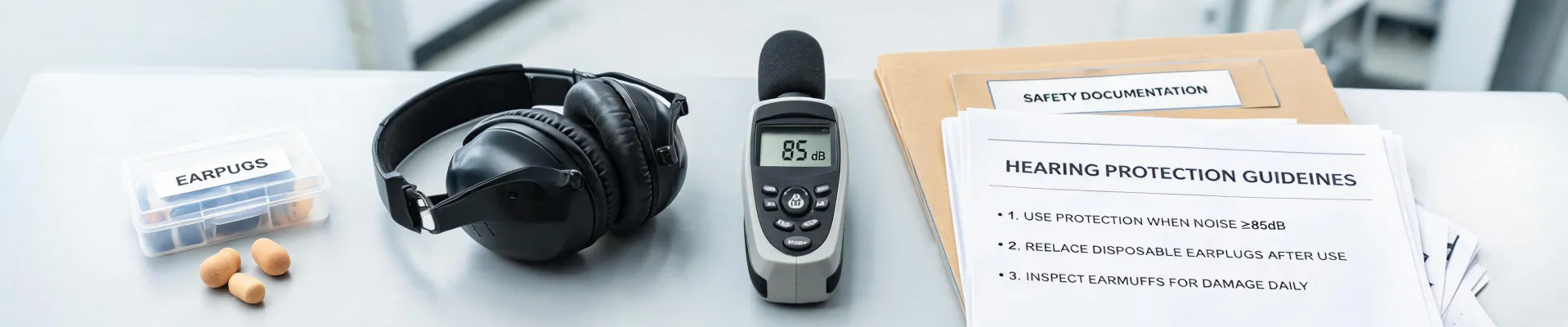
If you're a safety manager or procurement person responsible for ordering PPE — especially Howard Leight hearing protection — this checklist is for you. I've been handling orders for industrial safety gear since 2017, and I've personally made (and documented) eight significant mistakes, totaling roughly $8,600 in wasted budget. The worst one: a $3,200 order where every single box of earplugs had the wrong NRR rating printed on the packaging. That error cost $890 in redo shipping plus a 1-week delay.
This checklist has 6 steps. Follow them in order, and you'll catch the mistakes I didn't.
Step 1: Match the Noise Level to the Right NRR
You'd think this is obvious. It's not. In September 2022, I ordered Howard Leight Max earplugs (NRR 33) for a warehouse floor that only hit 85 dBA. The NRR 33 was overkill — workers complained they couldn't hear alarms. I had to reorder a lower NRR variant (surprise, surprise).
Here's the rule: Target a protected exposure of 75–80 dBA. Use the formula: (Noise level - (NRR - 7) / 2). For 85 dBA, NRR 33 gives (85 - (33-7)/2) = 85 - 13 = 72 dBA — too quiet. NRR 25 would give 85 - 9 = 76 dBA — just right.
Checkpoint: Verify the actual noise level (measure it, don't guess) and calculate the required NRR before ordering. Howard Leight Max corded earplugs (NRR 33) are great for 95+ dBA environments, not your average machine shop.
Step 2: Decide Between Corded and Uncorded Earplugs
I went back and forth between Howard Leight Max corded earplugs and the uncorded version for about two weeks. Corded offered convenience for workers who take them in and out; uncorded was cheaper. Ultimately chose corded because I'd seen too many uncorded plugs end up on the floor — and then in the trash after one use. But corded has its own problem: the cords can snag on machinery. If your workers are near rotating equipment, skip the corded (note to self: document this in the next training).
Checkpoint: Walk the floor. Watch how workers actually use earplugs. Then decide corded vs. uncorded based on their behavior, not the price sheet.
Step 3: Check Glove Compatibility (Nitrile vs. Latex)
This is the step most people skip. You order earplugs, you order gloves — separate line items, no thought about interaction. I once ordered nitrile gloves for a team that already used Howard Leight earplugs with a textured grip. The issue: the nitrile gloves' powder residue (some cheap ones still have it) gummed up the earplug surface, reducing hygiene. Switched to latex gloves for that station — problem solved.
The nitrile vs latex decision isn't just about allergies. Nitrile offers better chemical resistance and no latex proteins, but it's less elastic. Latex grips better when wet. For earplug safety, avoid powdered gloves regardless. And if workers wear both gloves and earplugs, test them together for a day.
Checkpoint: Test the glove-earplug combo on a small group before committing to a bulk order.
Step 4: Don't Forget the Physical Environment (Railing & Fence)
I know, I know — you're here for hearing protection. But your PPE order often includes things like railing or buckley fence for perimeter safety. Here's the mistake I made: I ordered Howard Leight earmuffs for a crew working near a new railing installation. The earmuffs' headband didn't clear the safety railing when workers bent down. They kept hitting the top bar, dislodging the earcups. The solution? Switch to a helmet-mounted earmuff model (Howard Leight makes several).
Similarly, if you're installing Buckley fence (a type of chain-link fencing), consider how it affects sound reflection and worker movement. A fence can bounce noise back, increasing ambient levels — meaning your initial NRR calculation might be off. I only learned this after ignoring a safety officer's warning and getting complaints.
Checkpoint: Map out the physical layout. Measure headroom near railings, gateways, and fences. Choose hearing protection form factors that fit the space.
Step 5: Verify the NRR Rating on the Product (Not Just the Catalog)
My $3,200 mistake came down to this: the catalog said NRR 33, but the boxes we received had NRR 29 printed on them. Turns out the supplier had mixed inventory from different production runs (a classic supply chain error). We caught it only after a worker complained about buzzing noise. By then, 200 boxes were open. $890 in return shipping, plus a week of disruption.
Per FTC guidelines (ftc.gov), advertising claims must be truthful and substantiated. But that doesn't guarantee every box matches the spec. I now check three boxes from every pallet before signing the receiving report. I also keep a photo of the NRR label on my phone for cross-reference.
Checkpoint: Spot-check 3–5 units per batch. Record the NRR numbers and compare to the purchase order. If they don't match, stop the order.
Step 6: Document the Decision Process (So Next Time You Don't Start From Zero)
After the third rejection in Q1 2024, I created a pre-check list — the one you're reading now. But more importantly, I started keeping a decision log: why we chose corded over uncorded, why we went with nitrile for chemical areas and latex for general work, why NRR 29 was actually better for the railing area (because over-protection is a real issue). It took me 3 years and about 150 orders to understand that vendor relationships matter more than vendor capabilities — but that's a different story.
Checkpoint: After each order, write down one thing you'd change. After 5 orders, review the pattern. You'll save your future self (and your budget).
Common Mistakes I Keep Seeing (And Hope You Avoid)
- Assuming 'one size fits all' for earplugs. Howard Leight Max comes in multiple sizes. Yes, even foam plugs have size ranges. Measure your workers' ear canals — or at least offer two sizes.
- Mixing glove types without testing. Nitrile and latex behave differently when handling earplugs. Test before bulk order.
- Ignoring the physical environment. Railing, fencing, low ceilings — they all affect which hearing protection works.
- Trusting catalog NRR without double-checking. Verify with physical inspection. It's not malicious; it's inventory chaos.
- Ordering everything from one vendor without an alternative. Online printers like 48 Hour Print work well for standard products — but for PPE, review the total cost of ownership, not just the unit price.
This checklist isn't perfect (honestly, no checklist is). If your situation is totally different — say you're ordering hearing protection for a concert venue, not a factory — some steps won't apply. That's fine. The goal is to catch the 80% of mistakes I've made. The other 20%? You'll learn them the hard way — but at least you'll have a log to keep yourself honest.

Maeve Callahan
Maeve Callahan is a head-protection analyst covering Type I and Type II hard hats, climbing-style safety helmets, bump caps, chin straps, suspensions, liners, and face-shield carriers. She applies ANSI Z89.1, EN 397, and EN 12492 criteria while comparing impact attenuation, penetration resistance, lateral deformation, electrical class, retention strength, field of vision, mass, fit range, and temperature conditioning. Her guides help EHS teams, contractors, utilities, and buyers select helmet systems for overhead hazards, work at height, electrical exposure, accessory compatibility, and worker acceptance.