-
The short version
-
Why I'm the person to listen to about this
- Mistake one: treating NRR ratings as interchangeable
-
Mistake two: "replacement straps" is not a product name
-
Mistake three: trusting search engines to be category-accurate
-
When Safariland isn't the right answer
-
What I'd tell someone starting now
The short version
After eight years and roughly $14,000 in avoidable reorders, my rule for Safariland procurement is simple: buy the retention systems and ballistic protection from Safariland, and buy everything else from whoever actually specializes in it.
The product quality was never the problem. The problem was thinking a brand name is a category, and that if something shows up in a Safariland search it must be the Safariland version of that thing.
Three mistakes below. None of them involved a defective product. All of them involved a bad assumption about what "Safariland" actually covers.
Why I'm the person to listen to about this
I've been handling law enforcement equipment orders for a mid-size agency for eight years. In that time I've made six mistakes I'd call significant—meaning they showed up in an audit, a budget review, or an uncomfortable conversation with a captain. I log them now. The team carries a pre-check list that's caught 47 potential errors in the last 18 months, and the list only exists because I kept getting it wrong first.
I'm not a Safariland critic. Roughly 70% of our retention holsters are Safariland (6004 and 6354 series mostly), our duty vests run on their carriers, and their ALS system has genuinely reduced our draw-and-fire incident rate. This isn't a cautionary tale about the brand. It's a cautionary tale about how I was searching for it.
Mistake one: treating NRR ratings as interchangeable
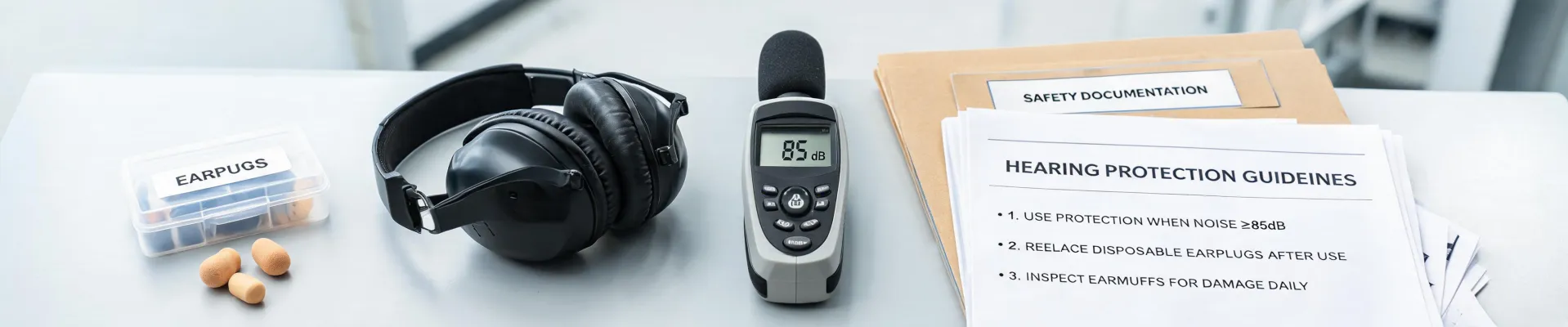
In spring 2022 I tried to save about $2,300 on hearing protection for our range instructors. The pitch was easy: several consumer earplug brands were getting a lot of press, quoting NRR numbers that looked comparable to the Safariland Pro Impulse electronic protectors we already stocked. Same rating range, lower price. Why not test half the team on the cheaper option?
The answer, which I learned over six weeks and three instructors complaining about not hearing range commands, is that an NRR number tells you almost nothing about usability in a live-fire environment. NIOSH's 1998 guidance is still the standard derating approach: for passive protectors, take (NRR - 7) ÷ 2 to estimate real-world attenuation. A plug labeled NRR 22 gives you around 7.5 dB in the field, not 22. That's fine if you're mowing a lawn. It's not fine if you need to hear a cease-fire call through twenty overlapping shots.
NIOSH Publication No. 98-126, "Criteria for a Recommended Standard: Occupational Noise Exposure" — the (NRR - 7) ÷ 2 derating is still cited by OSHA's field manuals as the realistic figure for passive HPDs.
What I should mention: the Impulse units aren't just rated, they're designed for the specific thing we do. Directional mics, ambient sound passthrough, sub-30ms impulse cutoff on gunfire. That's a design brief, not a rating. The consumer models were rated. They just weren't briefed.
A digression on search results that I wish I'd understood sooner
If you search for Safariland hearing protection today, more of the top results will be about the Loop earplugs controversy than about actual range equipment. Loop is a consumer product—good at what it's for, I'm told—but it has nothing to do with the use case. The search engine doesn't know that. It just knows both are earplugs and both generate traffic. I lost a full afternoon in 2022 going down that comparison rabbit hole before realizing I was comparing an acoustic filter to a passive noise attenuator to an electronic protector, all under the same shopping tab. That was on me.
Mistake two: "replacement straps" is not a product name
This one cost $1,200 and one very patient supplier relationship.
We needed to replace the elastic on 40 carrier systems—worn out shoulder straps and stretched cummerbunds after three years of range duty. I sent the order as "Safariland body armor replacement elastic straps." My vendor read that, nodded, and shipped 40 shoulder strap assemblies with elastic inserts.
What I needed was a carrier-specific elastic cummerbund kit, and what I got was the shoulder strap component. Same brand, same family, different part. I said straps. They heard shoulder straps. Discovered this only when the boxes arrived and none of the cummerbunds fit the SX carriers we run.
If I could redo that decision, I'd have ordered against the carrier model number, not against the brand name. Safariland's outer carriers span multiple product families—OC, SX, and the newer 7000-series—and the elastic attachments are not cross-compatible even when they look identical in a product photo. Order the carrier first. Order the part number second. Never order the description.
Mistake three: trusting search engines to be category-accurate
This is the meta-mistake, and it's the one I now warn every new hire about.
Run a Safariland search on any engine and you'll pull in results for dog pepper spray, a brand called Body Armor that makes sports drinks, and the endless query string can pregnant women drink body armor. The last one has nothing to do with ballistic protection and everything to do with a beverage that shares a name with a product category. The dog pepper spray results have nothing to do with the Defense Technology OC products Safariland actually manufactures for law enforcement—they're consumer self-defense items that ride the same keyword.
I know this sounds obvious when spelled out. But in 2019 I built a preliminary procurement list off the first page of a search, and roughly 30% of the line items were noise—consumer items, sports drinks, and one very confused conversation with a budget officer about why I'd listed a beverage in an equipment request. The search results told me more about content farms than about equipment.
The conventional wisdom is that a strong brand is a reliable filter. My experience with Safariland procurement suggests the opposite: a strong brand attracts keyword noise, and the noise is only visible if you already know the product categories well enough to spot the contamination.When Safariland isn't the right answer
None of this is an argument for a single-vendor strategy. The whole point is the opposite: know which category each item belongs to before you search, and buy from whatever vendor is actually the specialist in that category.
For our agency, that's looked like this in practice:
- Retention holsters and carrier systems: Safariland, without hesitation
- Custom-sized carriers for non-standard body types: a local shop that does made-to-measure work, because standard sizing doesn't cover everyone
- High-volume disposable range supplies: a general distributor, because Safariland prices these through specialty channels and we don't need the markup
- Hearing protection: Safariland Pro Impulse, because the impulse cutoff and directional audio aren't features a passive attenuator can replicate
The vendor who said "this isn't our category—here's who does it better" on our custom-sizing request earned my trust for everything else they quoted. That's the flip side of the $14,000: a specialist who admits the boundary is worth more than a generalist who lists everything.
What I'd tell someone starting now
Before you place a Safariland order, write down the category the item belongs to. Not the brand, not the product name, not the search keyword—the actual functional category. If you can't state it in one sentence, you're not ready to order. That's been the checklist entry that's saved us the most money, and it took three mistakes to figure out.
I want to say the $14,000 was all tuition. Some of it was. But the elastic strap order in 2021—that one I still think about. If I'd asked two questions before hitting submit, I'd have saved $1,200 and a week. Knowing that is the whole reason the checklist exists.

Omar Ben Salem
Omar Ben Salem is a traffic and facility-safety analyst covering traffic cones, delineators, barricades, bollards, guardrails, floor-marking tape, safety signs, convex mirrors, wheel chocks, and pedestrian barriers. He applies ANSI Z535 and ASTM F3016 criteria while comparing sign format, viewing distance, color contrast, retroreflectivity, wind stability, impact rating, barrier geometry, anchorage, floor adhesion, turning clearance, and traffic separation. His work helps warehouses, construction sites, logistics yards, municipalities, and facility planners organize vehicle routes, pedestrian zones, temporary work areas, hazard communication, loading operations, and physical protection priorities.