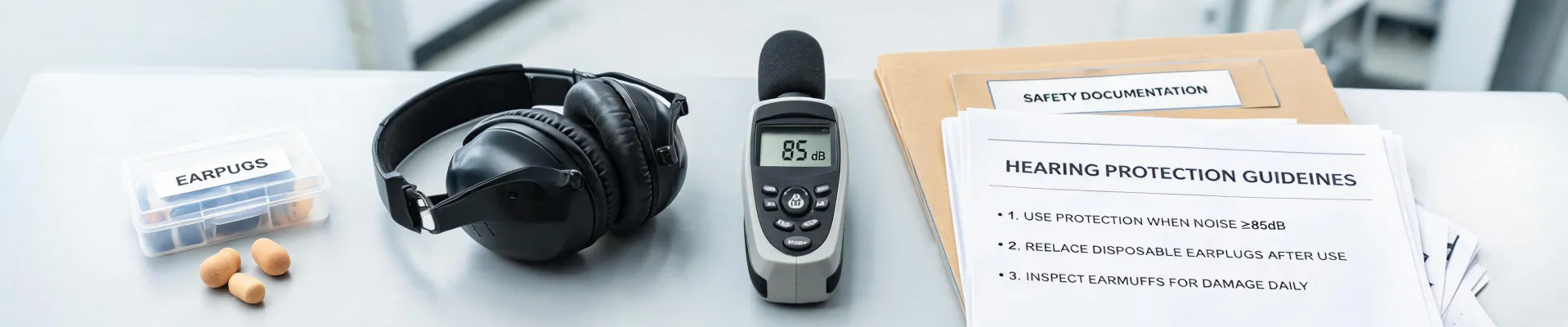
Here's the short version: you're probably ordering the wrong earplugs for your crew.
Not because the product is bad. Because the specs you're looking at don't match what your workers will actually wear. After managing PPE procurement for 7 years, I've personally made $8,700 in avoidable mistakes. The biggest one? A $3,200 order of Howard Leight Max-1 earplugs that ended up in the trash.
If you've ever approved a bulk PPE order without a pre-check process, you know the feeling. Here's what you need to do differently — starting with the single most overlooked spec.
Why you should trust this
I'm Robert Chen, a safety coordinator for a mid-size manufacturing plant in Ohio. In my first year (2017), I made the classic mistake: I ordered the highest NRR product assuming that meant the best protection. It didn't. The NRR 33 Howard Leight Max-1 earplugs looked great on paper. But my team complained they were too uncomfortable for long shifts, so they left them out. By the time I discovered the problem, we'd already gone through two cases. That error cost us $890 in redo plus a 1-week delay while we sourced alternatives.
Since then, I've documented 47 potential errors in PPE ordering using a simple pre-check list. It's saved us roughly $15,000 in wasted inventory. Bottom line: the right product isn't the one with the best lab test — it's the one your workers will actually wear consistently.
The three mistakes I see most often
Mistake #1: Picking earplugs by NRR alone
I said ''highest NRR'' when I placed the order. The warehouse heard ''best protection''. But the real meaning? Uncomfortable fit, low compliance. We discovered this when the safety team found earplugs on the floor after shifts. To be fair, Howard Leight's Max-1 has an incredible NRR 33 — industry-leading. But for workers who need 8+ hour wear, the Howard Leight Laser Lite (NRR 32) is often a better bet. It's softer, smaller, and more comfortable. The difference in NRR is negligible when compliance goes from 40% to 90%.
From my perspective, the real red flag is when someone orders the highest NRR without testing fit on 3-4 different people. If you ask me, that's a deal-breaker.
Mistake #2: Forgetting that earplugs are personal
We both said ''standard size'' but meant different things. Discovered this when the order arrived and half the crew said the foam didn't expand enough. Howard Leight offers multiple sizes (even within the Laser Lite line: regular and small). We didn't have a formal size verification process. Cost us when a $1,800 order had only 30% usable fit. The most frustrating part: you'd think the distributor would ask about sizing. But they just processed what we typed. After the third time this happened, I was ready to give up on online ordering entirely. What finally helped was creating a sample kit program — order a single box of each variant, have your team test them, then order the bulk based on actual fit feedback.
Mistake #3: Ignoring the ''coveralls gap'' when ordering multi-category PPE
If you've ever ordered earplugs and coveralls from the same supplier, you know the hassle of mismatched specs. In Q2 2023, we ordered a case of Howard Leight earplugs alongside Tyvek coveralls. I assumed the supplier would match the sizes correctly. They heard ''standard'' and shipped regular coveralls — but our team needed longs. The communication failure: I said ''regular size'' meaning the standard catalog item. They heard ''fits everyone''. Result: 50 suits that were too short, $720 wasted, plus a 3-day production halt.
Here's what you need to know: when ordering multiple PPE categories from a single vendor, write down the exact size spec for each item separately. Don't rely on a single ''order notes'' field. The automated process cut our turnaround from 5 days to 2 days, but only after we added mandatory verification fields.
Edge cases and exceptions
This checklist approach works great for standard PPE like passive earplugs and coveralls. But there are situations where the rules shift:
- Electronic earmuffs (like Howard Leight's Impact series): You can't just test comfort — you need to verify sound amplification and battery life in your actual noise environment. The specs vary drastically by model.
- Custom-molded earplugs: They require in-person fitting, so the online ordering checklist doesn't apply. Go through a certified audiologist.
- Fire extinguishers and fall protection: These have regulatory inspection cycles that override personal preference. Always check OSHA's current standards before ordering.
Granted, the pre-check list adds about 15 minutes per order. But it eliminates the $500+ mistakes I used to make. If you're ordering PPE from a large catalog, take it from someone who's lost sleep over a 40-foot container of the wrong earplugs — always test fit before you buy bulk.
Pricing references: Howard Leight earplugs range from $0.15–$0.50 per pair (based on major industrial supplier quotes, February 2025; verify current rates). Coveralls: $4–$12 per suit depending on material and certification. All prices exclude shipping and minimum order quantities.
Maeve Callahan
Maeve Callahan is a head-protection analyst covering Type I and Type II hard hats, climbing-style safety helmets, bump caps, chin straps, suspensions, liners, and face-shield carriers. She applies ANSI Z89.1, EN 397, and EN 12492 criteria while comparing impact attenuation, penetration resistance, lateral deformation, electrical class, retention strength, field of vision, mass, fit range, and temperature conditioning. Her guides help EHS teams, contractors, utilities, and buyers select helmet systems for overhead hazards, work at height, electrical exposure, accessory compatibility, and worker acceptance.